FLORIN
WEBSITE
©
JULIA
BOLTON HOLLOWAY, AUREO ANELLO
ASSOCIATION,
1997-2009: FLORENCE'S 'ENGLISH'
CEMETERY
|| MEDIATHECA
FIORETTA MAZZEI
|| ELIZABETH
BARRETT BROWNING || WALTER SAVAGE
LANDOR || FLORENCE
IN SEPIA || BRUNETTO
LATINO, DANTE
ALIGHIERI AND GEOFFREY
CHAUCER
|| E-BOOKS
|| ANGLO-ITALIAN
STUDIES
|| CITY AND
BOOK
I,II,
III,
IV, V || NON-PROFIT
GUIDE TO COMMERCE IN FLORENCE
|| AUREO
ANELLO, CATALOGUE || SITE MAP
CITY AND BOOK
CONFERENCES || CITY
AND BOOK I || CITY
AND
BOOK II || CITY AND
BOOK III || CITY AND BOOK V:
AMERICANS IN FLORENCE'S
'ENGLISH'
CEMETERY || BOOK-BINDING
WORKSHOP
|| BOOK FAIR
|| REGISTRATION
|| ABSTRACTS
|| MAPS
|| SPONSORS
PROCEEDINGS
OF
THE
THE CITY AND THE BOOK
V INTERNATIONAL CONFERENCE ON

THE
AMERICANS IN
FLORENCE'S 'ENGLISH' CEMETERY IV
SATURDAY, 11 OCTOBER 2008
FLORENCE'S
LYCEUM CLUB AND THE
'ENGLISH' CEMETERY
IV.
William
Wetmore
Story
'The Significance of Florence in the Life of William Wetmore Story and his Family'. Kathleen Lawrence, George Washington University
'A Storied Life: Marble Fauns, Angels, and Cemeteries: William Wetmore Story and Friends in Italy'. Elise Madeleine Ciregna, University of Delaware/ Forest Hills Cemetery
Kathleen Lawrence of George Washington University speaks on Florence and William Wetmore Story's family.
'The
Significance of Florence in the Life of William Wetmore Story and his
Family'
Kathleen Lawrence, George Washington
University. Abstract.
Scholars
usually
associate
nineteenth-century
American expatriate sculptor and litterateur William
Wetmore
Story with Rome
where he lived with wife Emelyn, daughter Edith, and sons Waldo and
Julian in
the Palazzo Barberini from 1856 until his death in 1895, and where he
maintained an active studio at 9, Via San Martino. What is less
well-known is
that Story and his family developed an intimate tie to Florence, first
through their close
friendship with Elizabeth Barrett and Robert Browning, but later even
more
significantly through daughter Edith Story’s marriage to Florentine
Simone
Peruzzi in 1875 and sons Waldo and Julian’s art life in the Florentine
circle
of painter Frank Duveneck in the 1880’s. Recently discovered
unpublished documents
and rare photographs in the possession of Story descendants reveal the
frequency of the Story visits to Florence
and to
the Peruzzi family summer villas “Il Lago” in Vallombrosa and “I
Busani” in
Rufina, in the hills of Florence.
Rare photographs also establish the influence of Florentine Renaissance
masters
Desiderio da Settignano, Antonio Rossellino, and Mino da Fiesole on the
sculpture of Waldo Story, an inspiration no doubt imbibed during son
Waldo’s
many visits to Florence.
Last
but
not least, son Julian established his painter’s studio in his
own
villa “Torre di Campiglioni” in Pelago where he lived and entertained
international nobility with first wife and famous opera singer Emma
Eames and
later with second wife Philadelphia
socialite Elaine Sartori from the 1890’s until his death in 1917.
With
Edith’s
marriage to Simone Peruzzi, the Storys formed a bond not only to Florence and the
ancient
Peruzzi family but also to the Medici, whose title “de Medici” was
conferred on
the Peruzzis by King Umberto and Queen Margherita in recognition of
Simone’s
service to the King. Edith’s serene Medici villas in Vallombrosa,
Antella, and Rufino drew the family
northward every
summer to join her, Simone, and sons Bindo, named for a Renaissance
Peruzzi
ancestor, Ridolfo, named for another ancestor, and daughter Maria
Cressida.
William Wetmore Story’s enchantment with Vallombrosa culminated in his
little
volume on the beloved spot where he died in Edith’s arms in 1895. What
is not
known is that Edith’s son Bindo, the glamorous godson of King Umberto,
died
tragically by suicide after a lengthy court marshal trial where it was
alleged
that he had had an affair with another young soldier in the King’s
army. His
funeral on April 4, 1907 was attended by the nobility of Florence,
including Counts Rucellai and
Corsini and Marquises Zaccaria and
Antinori. Bindo was buried in the Peruzzi/Medici chapel at Rufina.
During
Bindo’s scandal, only the loyal Pen Browning stood by Edith and
continued to
visit the family palazzo at 28, Via Maggio. Pen bought Edith’s other
villa at
Antella in 1901 to rescue her financially to be near her.
Meanwhile,
young
sculptor Waldo Story developed his own significant relationship to Florence whose
renaissance masters became his main influences as he sought to break
away from
his father’s neoclassicism. Masters Desiderio da Settignano, Antonio
Rossellino, and Mino da Fiesole inspired Waldo with their delicacy and
refinement and introduced him to the genre of the portrait bas relief,
which he
began to use for portraits of wealthy society figures in England and America.
In
addition,
Waldo
re-invented Desiderio’s tabernacle wall installations to celebrate the
lives of
distinguished English war heroes in his Portal Monument
in Winchester Cathedral. Perhaps most important, Waldo used Medici
iconography
on his last commission, the exquisite bronze doors of J. P. Morgan’s
library in
Manhattan, linking Morgan to the great banking families of Florence,
and his
own style to that of the great Ghiberti.
Julian
Story’s
life narrative also moved to Florence
after his
education at Eton and Brasenose
College, Oxford,
where
he
used
the quiet and beauty of Florence
and Vallombrosa first as a training ground with Duveneck and his bride
Lizzie
Boott and later as a studio and place of inspiration and socialization.
Thus in
the second generation of the Story family, the saga centers not so much
on Rome
but on Florence whose beauty and historical significance changed
forever the
lives of this important American expatriate family and the course of
American
art.
Paper
Florence in the Lives of William
Wetmore Story and his Family
Kathleen
Lawrence, George
Washington University
The name of nineteenth-century American expatriate
neoclassical sculptor William Wetmore Story has traditionally been more
closely
associated with Rome than with Florence. It was
in Rome
that Story lived and worked after his decision to leave Boston for good
in 1856 until his death in
1895. It was in Rome
that he established with his wife Emelyn their legendary Sunday evening
salon
in the sumptuous 50-room rented apartment at the top left of Palazzo
Barberini.
It was in Rome that this salon served as the gathering place for both
permanent
expatriate residents of Italy such as Robert and Elizabeth Barrett
Browning,
Harriet Hosmer, Vernon Lee, John Singer Sargent, Francis Boott, and
Francis
Marion Crawford, as well as important visitors and Grand Tourists such
as Matthew
Arnold, Alfred, Lord Tennyson, Mrs. Gaskell, Oscar Wilde, James McNeill
Whistler, Harriet Beecher Stowe, Mrs. Humphrey Ward, Fanny Kemble, and
Henry
James, among many others.

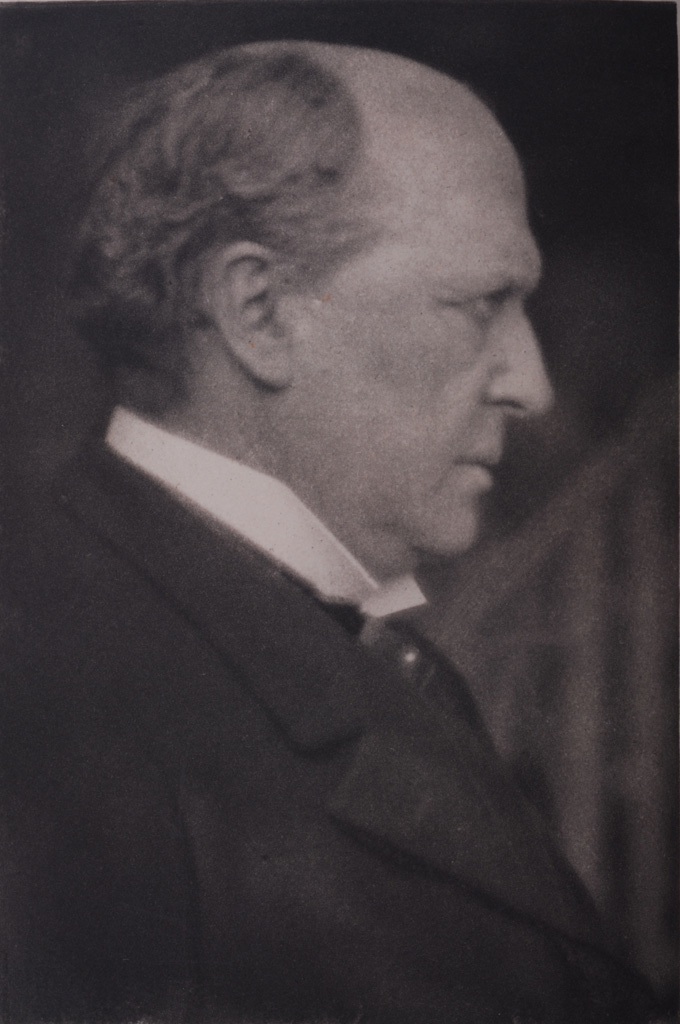
Henry James
Marking the beginning of a life-long relationship with
the Storys, Henry James wrote home in 1870, “I have now (proud
privilege) the
entrée of three weekly receptions—the Terrys, Storys, and Mrs.
Wister’s.”
James’s bond with the Storys proved to be a tangled web of association
filled,
on their side, with trust and friendship, and on his with complex
emotions
including jealousy, loathing, and guilt, climaxing in his two-volume
biography William Wetmore Story and His Friends
(1903) that, while commissioned by the family as a tribute, ultimately
treated
Story with artistic condescension and moral condemnation. James
revealed what
was to be a life-long tone of suspicion and critique of the Storys’
Roman life
in another early letter to his mother in 1870:
Mrs. Story is fair, fat, and
fifty, her daughter
chatty and an agreeable partner and very handsome withal and Mr. Story
friendly, humorous and clever. An apartment in a Roman palace is a very
fine
affair, and it certainly adds a picturesqueness to life to be led
through a
chain of dimly lighted chambers, besprinkled with waiting servants,
before you
emerge sonorously announced, into the light and elegance of a
reception-room
with a roof, not a ceiling.

Palazzo Barbarini
James’ sense of the inappropriateness of this grandeur
for Americans as well as his dictum that art required renunciation only
deepened with time, culminating in the censorious tone of William
Wetmore
Story
and His Friends, a subtle deprecation that
ultimately had devastating consequences for the Storys’ stature and
place in
the art historical canon. William and sons Waldo and Julian, sculptor
and
painter respectively, fell out of the canon until American art
historians
rehabilitated the elder Story in the 1960’s and 1970’s; Waldo Story has
yet to
be resuscitated, and, in fact, this talk and my forthcoming article for
the
journal Sculpture (March 2009) serve
as the beginning of the effort, to be followed soon by a monograph. But
while
James chronicled what he thought to be the deleterious effect of Rome
on the
Storys, nevertheless it was in Rome that Story played a role in the
civic lives
of the Anglo-American expatriates, serving not only as reigning host
but also
as legal counsel and activist whenever art intersected with politics,
in both
small matters of internecine battles among artists and larger matters
of
taxation of artistic works bound for the United States. Finally, it was
in Rome’s
Protestant
cemetery
in
1894 that Story installed his last and perhaps greatest
sculpture,
the “Angel of Grief,” as a memorial to his deceased wife Emelyn a year
and a
half before his own death. Suspending for once his critical venom,
James wrote the
following to Francis Boott about the “Angel of Grief:”

I read over your letter for the
twentieth time, and
light upon a mention of Story’s monument to his wife which I saw not in
the Cosmopolitan,
but, the last time I was at the Barberini, in the divine immortal
marble.
Seriously speaking, it struck me as the most genuine and graceful of
his
endless effigies, showing, perhaps, that emotion had for once taken the
place
of the other thing—I leave you to say what—that he never had.
This letter, while dated 1897, refers to James’s 1895
Roman sojourn, just after the death of Emelyn Story. After dutifully
calling on
the Storys, (William, now bereft of his wife, was not alone in the
Barberini
but living with son Waldo and daughter-in-law Maud Broadwood), James
wrote to
Boott that Story was “just the shadow of his old clownship” and the
Barberini
looked horribly “shabby.” James would have seen the “Angel of Grief”
with its
graceful neo-Florentine wings at Story’s studio rather than the
Barberini, but
curiously conflates the two here, using the “Barberini” to apply
metonymically
to the Storys’ entire Roman sphere. James’s reference to Story’s domain
foreshadows language in the 1903 biography where he condemns Story for
a life
of “great extremes of ease” lived amidst the “golden air” of Rome. In
describing the “Angel of Grief,”
James, eliminating the precise word for “the other thing…that he never
had,”
leaves Boott to supply his own word, perhaps “talent,” “beauty,” or
“genius,” a
technique James used in his fiction to heighten ominous implications,
seen, for
example, in The Turn of the Screw
where the reader never learns exactly what evil the ghosts perpetrate
on the
children. This method of indefinite suggestion in novel and letter
bespoke not
James’s delicacy or discretion but rather a way to enhance drama and
suggest
the worst by sparking the imagination.
Conceding its
genius, James saw the “Angel of Grief” in pristine condition at Story’s
studio
before its installation in the cemetery. What James did not fully
appreciate
was the Florentine influence on this masterwork, an example of
neo-Florentine
refinement that late in the elder Story’s career infiltrated his strict
neo-classicism. Amazingly, the angel’s face is fully bowed in grief,
yet it is
fully carved; to this day, no one knows how Story achieved that feat of
sculpting. The angel’s sweeping wings find their real source in the
work of
quattrocento Florentine master Desiderio da Settignano whose feathery
wings adorn
the angels and sarcophagus of his memorial monument to Carlo Marsuppini
(1464)
in Santa Croce, giving it richness and elegance.

Desiderio da Settignano, wings on tomb of
Cardinal Marsuppini, Santa Croce
Son Waldo adopted
these
luxurious Florentine wings cascading with a sense of languorous grace
for his
first great work, the exquisite “Fallen Angel” (1887) that I believe
inspired
his father’s last great work, the son’s aestheticism softening the
father’s
neoclassicism and embodying the elder Story’s final abandonment to his
emotion,
his deep love and devotion to Emelyn.
The wings in the work of Waldo Story and William
Wetmore Story are the emblem of the influence and significance of Florence in the
lives of
Story and his three children—his daughter Edith and sons Waldo and
Julian. It
was in Florence
that Story’s son Waldo found the inspiration for his own sculpture from
quattrocento Florentine masters Mino da Fiesole, Antonio Rosellino, and
Desiderio.
It was in Florence,
specifically
in
the countryside of Vallombrosa, that Julian Story built
his
house and studio where he lived and painted his grand canvases with his
first
wife opera diva Emma Eames and later with second wife Elaine Sartori
Story. It
was in Florence
that Story’s daughter Edith lived after her marriage to Florentine
nobleman
Simone Peruzzi, where she raised her four children Margherita, Bindo,
Ridolfo,
and Mira Cressida. With Edith Story as his side, Simone Peruzzi served
King
Umberto and Queen Margherita as chamberlain, participating in grand
court life
in Rome on the Quirinal and in Florence
at the Pitti
Palace when the
court traveled
northward. As a courtier close to the Queen, Edith was bedecked with
jewels and
finery, this American girl of Puritan roots at the epicenter of
European
majesty. To show his gratitude for service loyally rendered, King
Umberto
bestowed upon Edith and her husband the title “dei Medici” in 1897,
acknowledging the ancient Peruzzi family connection to the noblest of
Florentine dynasties, solidified in the 18th century when an earlier
Bindo Peruzzi married Anna Maria de Medici.
Thus it is Florence
more than Rome
that is responsible for the strong cultural influences and ultimate
contributions of the second generation of Storys abroad, a generation
whose
“story” needs to be told. The almost complete disappearance of these
three
siblings from the historical and art historical record is mysterious,
and tied
to their strange and sad fate, and to Henry James’ illicit denigration
in his William Wetmore Story and His Friends, a
condemnation whose repercussions reverberate to this day. I explore
this saga
of James and the Storys more fully in my article for Ateneo
Veneto, anno CXCIV terza serie, 6/11 (2007). Reacting
to
King
Umberto’s act of bestowing
the title “dei Medici” on the Peruzzis, James’s wrote to old Florentine
friend
Francis Boott, “I got, three days
since, a note from Edith of that house which brought home to me the
splendour
of the recent (though you haven’t heard of it, and won’t care if you
have)
Peruzzi change of name. They ‘have revived at the particular request of
the
King an old dropped marquisate of the family’ and are now (che vi ne pare?)
Marchesi Peruzzi dei Medici. What a pity
Mrs. Story sleeps with
her mothers!” Again, James’ sarcasm in this letter epitomizes his
attitude
towards the Storys that amounts to an illicit war against them, a war
that he
won by slanting the narrative, further proof of the power of discourse
in
shaping truth.
The Story family’s original ties to Florence date to
William, Emelyn, son Joseph and daughter Edith’s first sojourn in Italy
in
1849, before the birth of Waldo or Julian, when they traveled north
from Rome
and first met the Brownings happily ensconced in Casa Guidi. With the
exception
of poet, satirist, and diplomat James Russell Lowell, Robert Browning
was
William Wetmore Story’s single closest and most important friend for
forty years,
influencing his poetry and also the subject-matter of his sculpture,
for
example Story’s “Saul” (1881) that echoes Browning’s poem “Saul”
(1855).
Browning helped Story to integrate into the artistic and literary world
of
Europe, enabling him to gain admission to London’s prestigious
Athenaeum Club
under Rule II, (meaning that he was voted in by a select committee and
not
subject to a full vote of the membership), overseeing publication in
England of
Story’s prose work Roba di Roma (1862)
and Browning-esque dramatic monologues Graffiti
d’Italia (1875), and most
important, encouraging Story during his uncertain apprenticeship period
as a
sculptor before his first success as the Papal supported entry to the
London
International Exhibition of 1862. As Browning wrote to Mrs. Story from London after the
success
of Story’s “Cleopatra” and “Libyan Sybil,” “Anyhow, I rejoice heartily
in the
sale of the statues—a good comfortable fact, freeing you from any back-thoughts
and bother. William has a clear way before him & may do what he
pleases.” Story considered settling permanently
in Florence, writing to Lowell
from Paris in 1855, “We think of
returning to Florence
to establish
ourselves—but are not yet determined.” The Storys balked at returning
to Rome
with the traumatic memory of their first-born son Joseph dying there
from
scarlet fever in 1853, but ultimately Rome’s larger expatriate
community and
proximity to antique sculptural prototypes drew them back. Then too,
with
“Jo-Jo” buried in the Protestant
Cemetery, Emelyn
and
William “hated to leave him.” Story’s precursors, American expatriate
neoclassical sculptors Horatio Greenough and Hiram Powers, had found Florence the most amenable place to work,
especially given
its proximity to the marble quarries of Carrara
and Serravezza, its affordability, and congenial expatriate life.
Greenough, as
has been documented by Douglas Hyland in his dissertation on the
subject, was
also attracted to the more expressive neoclassicism of Florentine
Lorenzo
Bartolini (1770-1850) whose style dominated during his tenure at head
of Florence’s
Academy.
Other
important
Story family friends from Florence
included English poet Walter Savage Landor, who grew quite close to the
Storys
when they gave him asylum in Siena
in the summer of 1857 after his acrimonious break with his wife and
children.
Landor developed in particular a fondness for the young Edith Story for
whom he
wrote an unpublished epic poem on Princess Belgiojoso in 1857 that
begins “To
the Princess Belgioioso: What goddess in the middle of my path/Stops me
and
bids me follow? Now I see/That step majestic, and those eyes that
oft/Have made
the boldest drop and fear to gaze./Offspring of the Trivulzi!...” Edith
would
later publish retrospective articles on Landor for Century
Magazine.
Thus Edith Story was not a stranger to Florence in 1874
when she
came north to attend a Florentine ball at the age of thirty and met
Simone
Peruzzi who was almost fifty. It was in Florence
that Edith established her residence and became a writer and translator
after
her marriage to Peruzzi in 1875, and where she raised her own four
children,
Margherita, no doubt named for the queen, Bindo, Ridolfo, and Mira
Cressida,
named to commemorate a Peruzzi victory in the Battle of Cressida. Henry
James
saw Edith Story in Florence
in 1874 with her hostess the Princess Corsini and wrote to his mother,
“Edith
Story has just refused Peruzzi, aid de camp of the King and nephew of
the
Sindaco here, but nearly fifty and penniless.” Yet Edith Story did
consent to
marry Simone Peruzzi in 1875, moved to Florence,
and became part of a social circle that included the families of
Corsini,
Ricasoli-Firidolfi, Rucellai, Annaratone, Guicciardini, Zaccaria,
Antinori, and
many others. Edith Story became a translator and author, translating
the Autobiography of Sienese born but
Florentine trained Giovanni Dupre in 1886, a important subject for her,
as
Dupre’s sentimental Romantic-neoclassicism no doubt influenced her
father just
as the form of his Ferrari monument in San Lorenzo no doubt drew her
brother
Waldo towards the idea of the tabernacle memorial employed earlier by
Desiderio. Dupre had sculpted not only this Ferrari monument and the
monument
to Cavour in Milan, but also the large bas-relief of the Triumph of the
Cross
on the façade of Santa Croce here in Florence, the portrait
statue of Giotto in
a niche of the Uffizi, his Cain and Abel, but also his bust of
Baldassere
Peruzzi in the Palazzo Pubblica at Siena, a Peruzzi ancestor whose
status as
Renaissance painter and architect linked the Peruzzis to the Storys
through the
commonality not only of ancestry but also of art.
While Edith translated and wrote occasional nostalgic
magazine articles and tales of the Italian countryside, she died before
realizing her projected work on her father that was to be the
counterweight to
Henry James’s two-volume William Wetmore
Story and His Friends. As her father’s daughter, Edith divined the
embedded
and profoundly negative portrait of Story in James’s book, although it
was
obscured by James’s circuitous late style. What Edith could not have
guessed
was that the moral and aesthetic condemnation succeeded after Edith’s
death in
1917, lasting well into the later twentieth-century in carrying out
James’s
nefarious intention—to bury Story and to ruin him. James used multiple
avenues
to undermine Story, not only what he wrote in his biography, for
example, that
Story “was not in the end a sculptor,” that he “paid” for his life of
ease in
the golden air of Rome, and that he abandoned a precious New England
heritage,
but James also undertook a whisper campaign by letter and no doubt in
person to
their mutual circle. The implications of James’s negative assessment
amounted
to a character assassination that continues slowly to be reversed.
Beginning in
the 1970’s, Jonathan Fairbanks of the Museum of Fine Arts, Boston, and
William
Gerdts of the City University of New York began to reassess Story’s
work and
reevaluate it in terms of its cultural and artistic context, rescuing
Story’s
sculptures from the basements and storage vaults of American museums as
well as
the auction blocks of Sotheby’s and Christie’s. As stated before, this
talk is
another small but, I hope, significant landmark in the reclamation of
the
Storys as you will hear about his son Waldo who disappeared from the
canon but
whose lustrous and inventive sculptures I continue to identify in the United States, Great Britain,
and
Continental
Europe
in preparation for my monograph.
At the center of the untold “story” of the Storys is
the tragedy of Bindo, Edith’s first-born son and heir not only to the
Peruzzi
name but also the Medici title. Edith and Simone chose the name “Bindo”
for its
associations with the ancient Peruzzis, but Bindo was, in essence, the
last
great Medici. Bindo, born in 1877, was destined to become an elegant
social
lion, dashing horseman, godson to King Umberto, and captain in the
Italian
cavalry. Tragically, in 1903 Bindo became embroiled in a scandal after
a
jealous high-born lady rejected by Bindo found his love letters to
another
soldier and produced them to his commanding officer, leading to a trial
for
homosexuality and his eventual resignation from the army. The aftermath
of
disgrace was worse as Bindo was ostracized by society and even by his
own
family. Returning from Rome to Florence, Bindo
was relegated to the ground
floor of palazzo Peruzzi on via Maggio, 28. Once the center of
aristocratic
society, Bindo was now a pariah, and even shunned by his aunt, Julian’s
wife
the opera diva Emma Eames who used to welcome Bindo to her performances
and
would sing for him in Vallombrosa where Julian’s house bordered
Edith’s. In
April of 1907 the elegant Bindo took his own life, shooting himself in
the
heart in the ground-floor rooms at number 28, Via Maggio with last
rites at Santa
Felicita and burial in the family chapel at I Busini in Rufina.
Henry James and others refer obliquely in letters to
this great scandal, but James scholars have not known exactly what
happened to
Bindo, for Victorians were discreet and saved details of gossip for
intimate
fireside colloquy. Given the nature of the scandal in the years
following Oscar
Wilde’s disastrous trial for indecency in 1895, Bindo was erased from
the
annals of history. I happened one day at last to find out the truth
about Bindo
when, after years of scouring archives across the globe, I simply
“Googled”
“Bindo,” getting a reference to an article by Natalia Wright from the
1940’s in
which the name “Bindo” appeared in a footnote, the footnote directing
readers
to Mabel Dodge Luhan’s memoir European
Experiences (1935). Luhan, it turns out, as a young bride living
in Florence
befriended Bindo
in his ignominy, as her status as an American freed her from strictures
of
Florentine societal rules. Luhan heard from Bindo his tragic tale and
became
his confidante, discovering as well his and his mother’s spendthrift
habits
that led Luhan to give her pearls to Bindo to be sold to pay his debts.
Luhan
claims in her memoir, although this may be a narcissistic version of
the truth,
that it was after her jealous husband refused to allow her to associate
with
Bindo that he shot himself. What is less well-known about the Storys
and Florence
is that Robert
Browning and Elizabeth Barrett Browning’s son Pen Browning would become
Edith
Story’s longest and closest friends, standing by her during Bindo’s
downfall.
During this tragic time, Pen continued to visit Edith and Bindo at the
Peruzzi
residence at No. 28 via Maggio, furtively entering Bindo’s downstairs
rooms
when all other friends deserted them and refused to communicate with or
be seen
with Bindo. The final tragedy of the Peruzzis was Edith’s estrangement
from her
other son Ridolfo, later first world war hero, who deplored his
mother’s
spendthrift habits, expelling her from the family quarters and forcing
her move
to the Via del Giglio between the train station and San Lorenzo.
Unpublished
letters from Edith to her father reveal the financial strain that this
court
life placed on her, requiring servants, jewels, and lavish
entertaining. Her
father partly supported her with yearly endowments running into the
thousands
of Francs and Lire. This monetary burden was exacerbated by the
requisite
summer retreats at Vallombrosa and Antella, where she maintained
extensive
estates. Henry James somewhat expiated his guilt over the Story
biography and
decried this final tragedy, writing to Story daughter-in-law Maud
Broadwood,
"I am distressed to hear of the relations between Ridolfo and his
Mother.
What tragedies upon tragedies, and what a dark vision of poor Edith
alone and
embittered and uncomforted in her dark, black, corner of
Florence
today—with only the ghosts of the Medici to console her!”

Maud Broadwood
The Storys’ other important connection to Florence was
aesthetic
rather than genealogical and geographical and came through Waldo Story,
sculptor son of William who imbibed the influence of quattrocento
Florentine
masters. As related above, Waldo Story has been almost completely
erased by
time and fortune, a serious lacuna in the canon of late
nineteenth-century
Anglo-American artists. A combination of factors led to Waldo’s
exclusion,
beginning with modernist bias against Gilded Age aestheticism at the
turn of
the last century, aggravated by reverberations from James’s book on his
father,
and last but not least exacerbated by the scandal surrounding Waldo’s
running
off with opera singer Bessie Abbot, eroding his position in Victorian
society,
artistically and financially. Waldo paid dearly for his belated
reaction to the
exacting rigors of his studio workshop and adoption of the moral
double-standard of international society.

Bessie Abbot as 'Queen of the Night' and as
'Margaret'
As a young sculptor, Waldo Story sought an artistic
path separate from his father’s Romantic-neoclassicism, developing a
style
imbibed from lifelong exposure to art in Florence.
It was in Florence
that Waldo discovered Renaissance masters Donatello, Rossellino, Mina
da
Fiesole, and Desiderio da Settignano, artists whose influence led him
toward a
delicate quattrocento aestheticism seen in his portrait bas-reliefs
with their
Donatello-esque schiacciato, meaning
extremely low relief, as well as his portrait busts and life-size
statues
balancing naturalism with graceful refinement.

Mino da Fiesole, St Helena Empress

Waldo Story, Portrait Relief
Waldo Story’s memorials especially looked to
Florentine models for their form and content. His Portal Monument
(1897) in
Winchester Cathedral, Crawshay Memorial (1903) in Merthyr Tydfil,
Wales, and
Belmont memorial (1903) in Newport, Rhode Island all looked to
Florentine
examples, in particular to the concept of the tabernacle or wall
memorial seen
in Santa Croce’s Tomb of Cardinal Marsuppini by Desiderio and Tomb of
Leonardo
Bruni by Antonio Rossellino.
In addition to his plethora of commissioned busts, bas
reliefs, and statues, Waldo Story created magnificent fountains for
elite
English aristocrats across Britain
as well as American magnates. In his work on fountains, Waldo departed
from the
quiet elegance of quattrocento models and looked for inspiration to
later
Renaissance and Baroque statuary and fountains in the gardens that ring
Florence, including Villa Castello,
Villa Petraia, and
Villa Medici Pratolini, now Parco di Demidoff, and most importantly the
Boboli Gardens.
Waldo Story’s colossal and playful “Triumph of Galatea” (1890) for the
Rothschilds at Ascott House, his “Elixir of Love” (1894) for the Astors
at
Cliveden, and his “Mermaid Fountain” (1899) at Blenheim are based on
Italian
and Florentine prototypes that employ mythological tritons, mermaids,
dolphins,
and sea-horses. Steeped in the Florentine celebration of nature and
myth, Story
brought Italy
home for English and American upper-class Grand tourists who yearned to
fuse
Italian beauty with their local flora and fauna. For example, William
Waldorf,
First Viscount Astor was a great Italophile who had spent formative
years in Rome studying sculpture under
Waldo Story’s father and had
later returned to the Eternal
City as Ambassador
in the
1880’s. Employing Waldo Story to transform the gardens at Cliveden,
Astor
ordered the monumental “Elixir of Love” to be the focal point of the
main
approach to his grand house, as well as the smaller “Turtle” fountain
to add
charm to his lower terraced grounds, along with benches, balustrades,
gates,
and urns. Story’s studio operated like the classic Florentine
renaissance
workshop to supply decorative stonework and bronze in all forms and
genres,
blurring the lines between high art and low in filling the needs of the
client,
the modern marquese or count.
Waldo’s great sin was to escape the exacting demands
of his huge studio in Rome and his
position of
de facto head of the Anglo-American expatriate community in Rome
by running off to America
with opera diva Bessie Abott, whom he had met soon after 1900 on one of
his
transatlantic crossings. The strain of Waldo’s great success providing
sculptural works to the highest elites in England, America, and the
Continent
had led to a decrease in his health around 1899, a situation that
alarmed even
Henry James, who wrote to their mutual friends the Curtises in Venice
that
“Waldo needs imperatively six or seven months complete rest, which he
will not
get, thanks to his vast marble workshop.”

Waldo with his father and the studio assitants
James’s life was intricately bound up with the Storys
and theirs with his, as they shared so many of the same friends, other
Americans in Italy such as Daniel and Ariana Curtis in Venice at the
Palazzo
Barbero, Katharine Bronson at Casa Alvisi, Francis Boott here in
Florence at
Villa Castellani, the Huntington/Wagnieres, Thomas Crawford’s widow
Louisa Ward
and her son the writer Francis Marion Crawford, and English expatriates
such as
Fanny Kemble’s sister Adelaide Sartoris and her daughter Sarah Butler
Wister,
Matthew Arnold’s niece Mrs. Humphrey Ward, and doctor, architect, and
writer
Axel Munthe. James appeared to the Story siblings to be the perfect
person to
enshrine their father’s memory for posterity. But they let a fox into
the fold.
James attempted to refuse, but the Storys persisted, in particular Maud
Broadwood Story, who was close to her father-in-law William Wetmore
Story and
wanted not only a great author, but also someone who had known the
family since
his second sojourn in Italy
in 1872. James demurred—he tried to extricate himself, but if he was
going to
do the Story biography, then he could only do it his way. The subject
was too
intricately tied to his own deepest moral and artistic beliefs and
choices, his
idea that art required renunciation, his sense that Rome was a place of decadence, and,
finally,
his belief in the significance of the written word as a calling for
Americans,
and especially New Englanders, rather than marble “effigies.”
I hope
that my
talk has contributed to a reversal in the fortunes of the Storys, to a
greater
appreciation of Edith and Bindo, the recovery of Waldo from historical
erasure,
and, in particular, to an understanding of the significance of Florence in
the life of
William Wetmore Story and his children.
Elise
Madeleine
Ciregna,
of the University of Delaware and Curator of Forest
Hills Cemetery, again speaks on William Wetmore
Story.
A
Storied Life: Marble Fauns, Angels, and Cemeteries: William
Wetmore Story and Friends in Italy
Elise
Madeleine
Ciregna,
University of Delaware/ Forest Hills Cemetery.
Abstract.
The development of
American sculpture in
the nineteenth century owed a great debt to Italy
and that country’s rich
artistic heritage. Horatio Greenough,
often called “America’s
first
sculptor”
since he was the first American to pursue sculpture
exclusively
as his career, settled in Florence
in the 1830s, to train with Lorenzo Bartolini of the Accademia di Belle
Arti,
and where Greenough would spend most of the rest of his life. In Florence Greenough became part of the
artistic and literary circles that included Samuel F.B. Morse and
Thomas
Cole. Aspiring American sculptors for
the next two generations would follow Greenough’s example, leaving
their native
country to train and work in Italy,
and to become members of the expatriate artistic community.
One of the greatest lights
of that
community was the sculptor William Wetmore Story. The
son
of
eminent American jurist Joseph
Story, William Wetmore Story dutifully, if reluctantly, followed in his
father’s footsteps and became a lawyer.
But his father’s sudden death in 1845 gave the younger Story an
opportunity to follow his artistic leanings.
Responding to Mount Auburn Cemetery’s
(Cambridge, Massachusetts) search for a sculptor
capable
of producing a worthy monument to Joseph Story, William Wetmore Story,
without
any professional experience but with all the right social connections,
gained
the prestigious commission. Incredibly,
recognizing that the aspiring young sculptor would have to actually
first learn
his craft, the Mount Auburn Committee agreed that Story would close his
law
practice, move to Italy, and train and work for nearly ten years before
expecting a finished product. The
Committee was pleased with the statue, delivered in 1854.
Thus the career of one of America’s
greatest nineteenth century sculptors and one of its most famous
expatriates
was launched.
Story’s life and career,
once based in Italy,
did,
indeed,
become
the stuff of fiction.
Story’s close friend
Nathaniel
Hawthorne—a writer who was enamored of Italy and an admirer of
stonecutters and
sculptors—immortalized Story as the character of Kenyon, the sculptor,
in his
novel “The Marble Faun.” Story became
one of the nineteenth century’s most prolific and successful American
sculptors. He lived in the Palazzo
Barberini in Rome,
which
was
a vibrant center of artistic and intellectual exchange with
the many
other artists and writers Story knew, among them Elizabeth and Robert
Browning,
Thomas Crawford, Randolph Rogers, and James Russell Lowell. Many of Story’s most celebrated works were
inspired by classical mythology and by figures of the “Antique” world,
for
example his celebrated statues of Cleopatra and Sappho, regarded as
models not
only of exquisite workmanship, but as examples of an admirable
archaeological
attention to authentic detail.
As Story’s first
professional sculpture was
a tribute to a close family member and destined for placement in a
cemetery, it
seems fitting that his final major work was also an important cemetery
sculpture: The Angel of Grief,
created in 1893 for his wife Emelyn’s gravesite in the Protestant
Cemetery in
Rome, and under which Story himself was laid to rest in 1895. The
Angel of Grief has proven to be an enduring and resonant work; at
least
seven copies of it exist in cemeteries across America
and elsewhere.
Henry James, an
acquaintance of Story’s,
would later write a “biography” of William Wetmore Story and his
friends. James found Story’s celebrated
friends more
compelling than Story himself, but in recent years Story has been the
subject
of critical reevaluation, most notably in the work of art historian Jan
Seidler’s as yet unpublished dissertation.
This paper looks at the career of William
Wetmore Story and his life in Italy,
inextricably
linked
to the romance of white marble and cemeteries, Italy’s
tradition
of
sculpture and history, and to the artistic and literary
expatriates Story counted as friends.
William Wetmore Story, regarded as one of nineteenth century America’s greatest sculptors and yet
largely
ignored after his death, will be restored to his important position
within the
context of nineteenth century Italy
and the artistic community.
With the Sponsorship of the Comune
di Firenze, the United
States
Consulate
General
in Florence, Syracuse
University in Florence, Oxford
Dictionary of National Biography, the Lyceum Club of Florence,
the Chiesa Evangelica Riformata Svizzera of Florence, and
the
Aureo Anello
Associazione Mediatheca 'Fioretta Mazzei' e Amici del
Cimitero 'degli Inglesi'


CITY AND BOOK
CONFERENCES || CITY
AND BOOK I || CITY
AND
BOOK II || CITY AND
BOOK III || CITY AND BOOK V:
AMERICANS IN FLORENCE'S
'ENGLISH'
CEMETERY || BOOK-BINDING
WORKSHOP
|| BOOK FAIR
|| REGISTRATION
|| ABSTRACTS
|| MAPS
|| SPONSORS
FLORIN
WEBSITE
©
JULIA
BOLTON HOLLOWAY, AUREO ANELLO
ASSOCIATION,
1997-2009: FLORENCE'S 'ENGLISH'
CEMETERY
|| MEDIATHECA
FIORETTA MAZZEI
|| ELIZABETH
BARRETT BROWNING || WALTER SAVAGE
LANDOR || FLORENCE
IN SEPIA || BRUNETTO
LATINO, DANTE
ALIGHIERI AND GEOFFREY
CHAUCER
|| E-BOOKS
|| ANGLO-ITALIAN
STUDIES
|| CITY AND
BOOK
I,II,
III,
IV, V || NON-PROFIT
GUIDE TO COMMERCE IN FLORENCE
|| AUREO
ANELLO, CATALOGUE || SITE MAP