IV. STEALING HERCULES' CLUB
INFERNO XXV'S
METAMORPHOSES1
 t is the nature of poetry, which is the
opposite and yet the mirror of nature, to lie and to steal.
But it is also its nature to teach ethics. Dante in the Commedia
creates a fiction, poetando (99) with past poets,
mutating and metamorphosing their works, which do "suffer a
sea change, into something rich and strange."2 Yet he
intersperses and intermingles these lies and thefts with
Biblical and Florentine history, the past and the present
truths, as well as leading us into realms of make-believe.
He combines and intertwines Romanesque materials with Gothic
intricacy. To decode his text we shall need to explore both
prior texts and archival documents, all of which in the
canto are stolen for its uses, just as Vanni Fucci steals
from the Pistoian treasury, its reliquary and archives, and,
further, even imputes that crime to another, causing the
gravest miscarriage of justice, a surrogate execution.
Indeed, in many of the circles of sins, Dante himself
presents himself as sinning that sin as our surrogate.
Witness his dying fall in Inferno V, his outburst of
anger in VIII, and, if it is sodomy that is punished in XV,
his homoeroticism for Ser Brunetto in that canto. From these
sins, but only by means of confession, contrition, and
satisfaction, Dante, and we his readers, can be exonerated
and redeemed, becoming like Dismas, the repentant Good
Thief, crucified beside Christ.
t is the nature of poetry, which is the
opposite and yet the mirror of nature, to lie and to steal.
But it is also its nature to teach ethics. Dante in the Commedia
creates a fiction, poetando (99) with past poets,
mutating and metamorphosing their works, which do "suffer a
sea change, into something rich and strange."2 Yet he
intersperses and intermingles these lies and thefts with
Biblical and Florentine history, the past and the present
truths, as well as leading us into realms of make-believe.
He combines and intertwines Romanesque materials with Gothic
intricacy. To decode his text we shall need to explore both
prior texts and archival documents, all of which in the
canto are stolen for its uses, just as Vanni Fucci steals
from the Pistoian treasury, its reliquary and archives, and,
further, even imputes that crime to another, causing the
gravest miscarriage of justice, a surrogate execution.
Indeed, in many of the circles of sins, Dante himself
presents himself as sinning that sin as our surrogate.
Witness his dying fall in Inferno V, his outburst of
anger in VIII, and, if it is sodomy that is punished in XV,
his homoeroticism for Ser Brunetto in that canto. From these
sins, but only by means of confession, contrition, and
satisfaction, Dante, and we his readers, can be exonerated
and redeemed, becoming like Dismas, the repentant Good
Thief, crucified beside Christ.

Altar to St James, Pistoia
Cathedral. In Dante's day the silver altar had, since 1287,
only figures of the Madonna and Twelve Apostles in Gothic
niches, Vanni Fucci stealing these, along with the city's
archives, 25 January 1293. In the fourteenth and fifteenth
centuries these other figures seen here replaced the loss
through theft. Sabatino Ferrali, L'Apostolo S. Jacopo il
Maggiore e il su culto a Pistoia (Pistoia: Opera dei
santi Giovanni e Zeno, Fabbriceria della Cattedrale, 1979).
Dante, if this is the playful logic of the fiction, in the Circle of Thieves, becomes himself a thief, an arch-plagiarist, robbing material from countless Roman and Romanesque prior authors, Terence, Virgil, Pliny, Livy, Ovid, Sallust, Statius, Lucan, Apuleius, Jerome, Isidore, and Brunetto Latino, braiding and insinuating their writings intertextually, metamorphosing Latin into Italian as he does so, in order to shape his text in turn about contemporary events.3 Rather than humbly acknowledging his sources, or making restitution for his thefts, he here boasts of his act vaingloriously, "Taccia Lucano . . . . /Taccia . . . Ovidio." The early commentators note that here Dante intermingles fraud, theft, and violence.4 As had Virgil before him, and as Spenser would after him, he plays with the texture of his poetry as being the poisonous snake concealed in the grass, Aeneid II.471-475, Inferno VII.84, Faerie Queene III.xi.28, entrapping his reader unawares.
Behind this text of Inferno XXIV-XXV, is a tangible artifact, the silver shrine at Pistoia to St. James as Pilgrim, today with a fine Gothic image of St. James as Pilgrim, with pilgrim hat, scrip, staff, and gourd, at its center and with Adam and Eve and the serpent in the garden, which was spoken of as that city's Palladium. In Paradiso XXV, in the Commedia's symmetry, Dante the Pilgrim will come face to face with St. James the Pilgrim who tells him he has been permitted to come from Egypt to Jerusalem (55-56). In a sense, in silver, that Pistoian shrine and Palladium is in turn a divine comedy, interspersed with tragedy. For generations Pistoians added to its treasure, in the hopes of attaining their souls' salvation; and sometimes subtracted from it by theft, compounded with lies, even to the bearing of false witness resulting in death sentences, to their eternal damnation. Bastard Vanni Fucci, one such thief, ending the previous canto with bitter prophecies, now at the beginning of this canto, "al fine delle sue parole," as a thief, "il ladro," mockingly blasphemes God.
Christ had been thought to trample upon serpents, being interpreted as the one in Psalm 91 who "Super aspidem et basiliscum ambulabis; et conculabis leonem et draconem," [You shall trample upon the lion and adder; you shall trample the young lion and the serpent under your feet].5 (The difference here between the Latin and the English is due to the English being more accurately translated from the Hebrew, the Latin referring to asps, basilisks, lions and dragons.) Hellishly, in Inferno serpents embrace Fucci as one of their own, stealing and turning inside out Virgil's description of the just Laocoön and his sons at Troy, defeated by Sinon's insinuating rhetoric6 and enwreathed by the two serpents from Tenedos (Aeneid II.40-249). Sinon similarly, in a photographic negative, held up his just un-shackled hands, proclaiming that his words serve and save Troy (145-161). Sinon is blasphemously and treacherously parodying Laocoön's Christlike truthfulness and piety. Connected with this scene is another, of the theft of the Palladium, the idol of the Virgin Pallas Athena from Troy by Ulysses and Diomedes, Sinon's colleagues who, he now lyingly says, have treacherously turned against him.7 Palimpsested upon that is also Theban Capaneus' blasphemy against God.8 Contemporary Pistoia and Florence are thus intermeddled in Dante's poetry with Statius' Thebes and Virgil's Troy.9
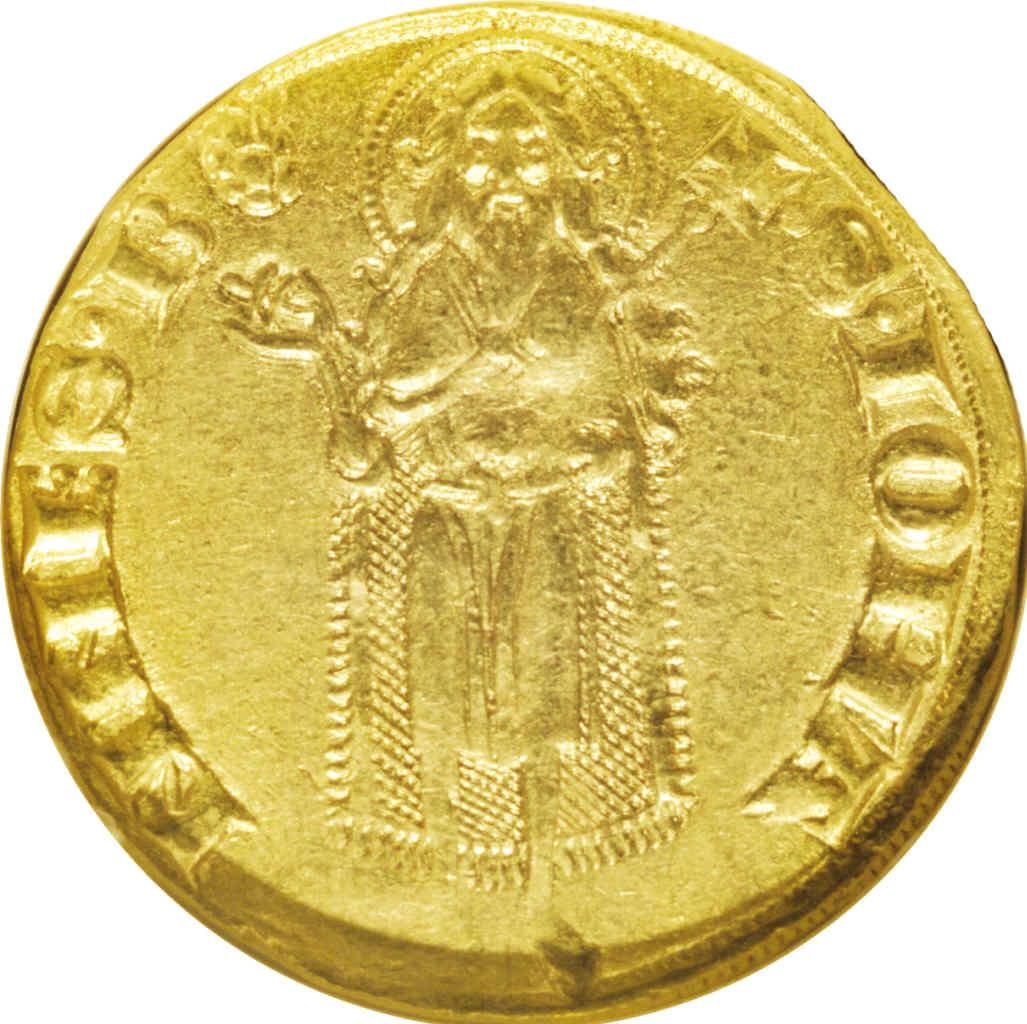
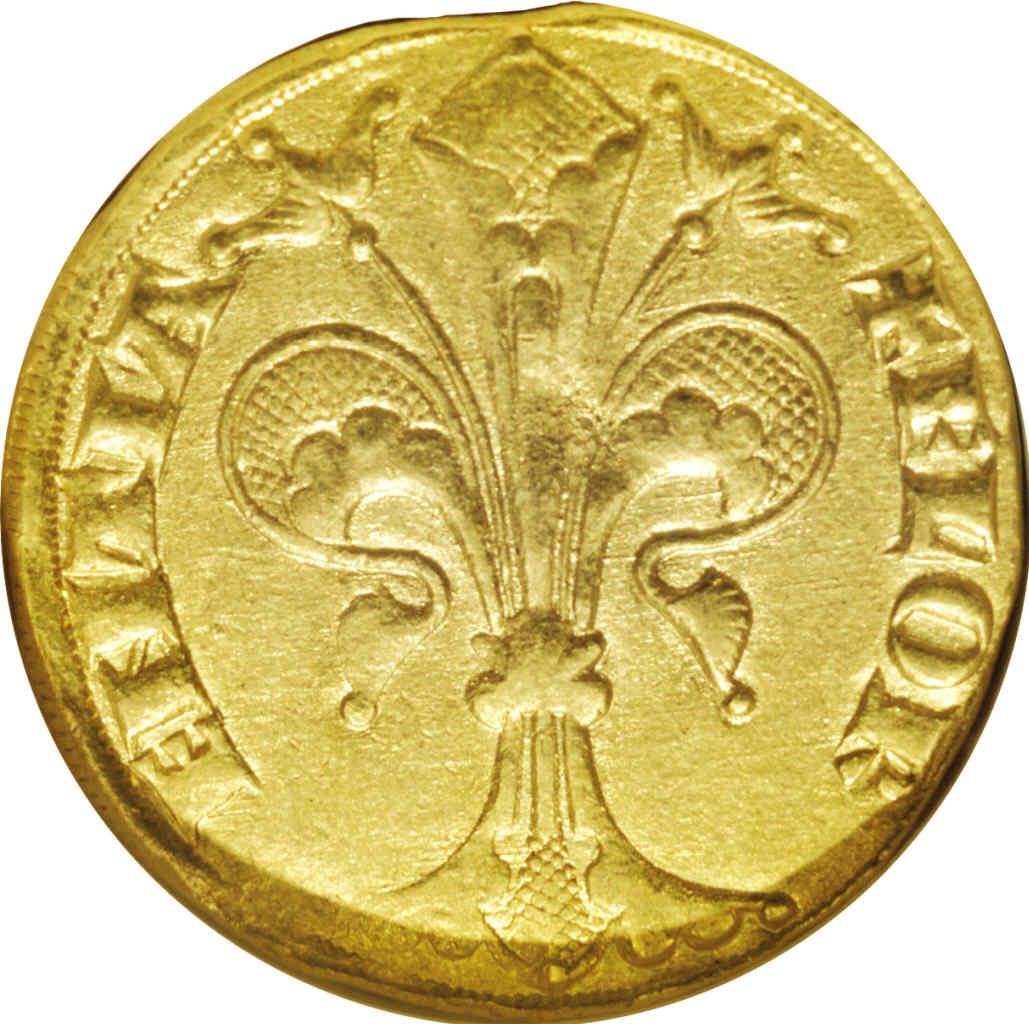
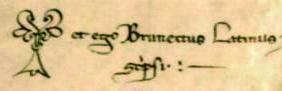
Let us look at actual and historical documents, which survive in Florentine and Pistoian archives to this day. In 1292 a Florentine council meeting, at which Brunetto Latino was present, had discussed Vanni Fucci in connection with a horse valued at thirty-two florins of gold.10 Dante's text associates him, as a bastard, with a mule (Inferno XXIV.125).11 When the supposed thieves were sentenced to be executed it was by being hanged to death after first being dragged to the square by a horse or a mule.12 For Vanni Fucci, in 1294, stole the silver relief statues of the Virgin Mary and the Apostles from the altar panels of Sant' Jacopo, the treasury of Pistoia's Duomo, enshrining their most precious relic acquired from Compostela.13 His act parallels that of Ulysses and Diomed stealing the Palladium of the Virgin Athena from Troy. To save his own neck Vanni Fucci accused Vanni della Mona of the crime, bearing false witness against him, for which his surrogate and namesake was executed. We learn of a payment for a mass for the dead for Vanni della Mona, in 1296, of thirty soldi, thirty pieces of silver.14 In another version of the account it was said that these two implicated a third, who was innocent, and who was exonerated in time, due to his prayers to the shrine and its relic.15
It is interesting that these events transpired when Dante's own relative, Giano della Bella, was podestà of Pistoia, Corso Donati having been so earlier,16 and that another member of Dante's family, Rolandus de Aldigheriis or Rainaldi di Aldigeriis, had been captain from May, 1272, to February, 1273.17 Dante's household, as well as his teacher, would thus be familiar with these Pistoian events. Moreover, the Tuscan pattern of hiring a captain and a podestà from another city to enforce the Ordinances of Justice created a legal intertextuality amongst these cities. Those of Pistoia, written out under Charles of Anjou in 1267, were preserved in the treasury of Sant' Jacopo, and remained in force until Florence took over in 1296.18 Giano della Bella, of course, had enforced such Ordinances of Justice upon Florence herself, 1293-1295, next being driven into exile while the Pistoian pestilence of Black and White reached Florence, ranging Dante Alighieri and Guido Cavalcanti of the White party against Corso Donati of the Black, events which would result in the tragedies of Guido's death from pestilence and Dante's own bitter exile.19
Now the stealing, lying Vanni Fucci is wreathed with serpents who shackle him, as he makes the defiant gesture of the "figs," the almost-punning, metamorphosing fiche/Fucci, of the woman's genitalia, in opposition to the masculine, of the serpents.20 We learn that Prato forbade that sign and yet that neighboring Pistoia erected two marble arms making that gesture towards Florence.21 Vanni Fucci is associated with Thebes, written about by Statius, and with Troy, written about by Virgil, though he is unworthy of epic immortalizing. He is by birth from Pistoia, the city founded by the traitor Catilina and named for "pestilence,"22 written about by Sallust and Livy, Latino and Villani. Dante next gives a reference to the Maremma, notorious in turn for its pestilences and snakes.23 In these attitudes Dante blends together the truth of history and the projections of propaganda; he also makes use of the past as a "Distant Mirror" of his present. In this canto it is as if he plays a game of snakes and ladders with time, with history and poetry.
Lurking and being insinuated into the words of Inferno XXV is also an episode from Aeneid VIII, from Livy I and VII, and from Ovid, Fasti I, where we find the monster Cacus (Evil) stealing Hercules' spoils from the monster Geryon, reversing the oxen's hoofprints to furtively conceal his act and being then killed by blows from Hercules' club.24 This can take us to a study of Milton's intertextuality, based on Virgil's comment that it was easier "to steal the club of Hercules" than to purloin a line (or letter) from Homer.25 Moreover, Dante's blatant stealing and braiding of texts is not unlike the splendid intertwines and arabesques of the Turkish carpet design he gives to the monster of Fraud, Geryon (in turn, braided into the tale of Hercules and Cacus), and whom Virgil and Dante trust to fly them in labyrinthine gyrations down the ravine in Inferno XVII. 14-18.
Added to these plagiarized and insinuating uses of texts are those by Brunetto Latino. Dante's teacher had written an encyclopedia, in French, Li livres dou Tresor, in Italian, Il Tesoro, which includes a section in its bestiary on serpents, these chapters being "delli serpenti, dell'àspido, della natura del basilischio, della natura di più dragoni, della natura dello isitalis, della vipera, del lusardo e della salamandra."26 A magnificent Laurentian manuscript, Plut. 42.19, written in Florence probably during Brunetto's lifetime and under his supervision, and which Dante may well have seen and read as a young man, has the luridly green serpents illuminated, perhaps with poisonous arsenic, as slithering between the chapters which discuss them.27 It is useful to remember that medieval zoology was not accurate concerning snakes, serpents and dragons, these being seen by them as having clawed feet. Besides that Tesoro bestiary, Brunetto Latino, in the Rettorica, spoke of Sinon and of insinuatio, accepting that pun.28
For lack of space, I pass over most of the discussions of serpents in the Tesoro, which in turn derive from Isidore, Lucan, Ovid, and Pliny, discussing only as a test case one out of many, the basilisk.29 Interestingly, this one, which is not in Dante's Commedia, is read into that text by James Joyce and Umberto Eco. Basilisks are the kings of serpents. Filled with venom, the basilisk can kill birds by its smell and with its gaze slay men. It is the size of a foot, with white stains, and crested like a cock. Alexander found basilisks and let men see them through one-way walls of glass made up of bottles, thereby being able to kill them with arrows and liberating his army from them.30 Even Umberto Eco warns us, with Salvatore's Desperanto (derived in turn from James Joyce's addition from Brunetto Latino to Inferno XV), as if braiding it into that canto and XXV, "Cave basilischium! Est lo reys dei serpenti, tant pleno del veleno che ne riluce tuto fuori! . . . Ti attosca . . . Et ha macule bianche sul dosso, et caput come gallo . . . ." [Beware the basilisk! It is the king of serpents, so full of poison that it can relight all outside it. It poisons you. And it has white spots on its back, and a head like a cock's.]31
Already, in Canto XXIV, Dante had written
Più non si vanti Libia con sua rena;He thus outdoes Lucan's Pharsalia in so describing Vanni Fucci coiled about with serpents, dropping to the ground as ashes, then being hellishly reborn, Phoenix-like, from them. Now Dante steals a further episode.
chè se chelidri, iaculi e faree
produce, e cencri con anfisibena. 85-88[Libya could not boast with its sand of producing such chelidri, jaculi, phare, and cencri with anphisbena.]
Taccia Lucano omai là dov'e' toccaThat rhetorical and slithering use of the occupatio contains within itself the joking madness of stating it does not state what it is stating; being Plato's Pharmacy of the oxymoron of silent speech, the speaking silence of prior books, written by now dead, once living authors. That ambiguity is now spread throughout this cloven-tongued and hissing canto and the Commedia.33
del misero Sabello32e di Nasidio,
ed attenda ad udir quel ch'or si scocca. 94-96[Be silent now, Lucan, where you touch upon the miserable Sabellus and of Nasidius, and wait to hear what will now follow.]
In Lucan's text that censored/stated passage is further embedded in one of horror, which it in turn outdoes. Lucan claims that the serpents in the Libyan desert are due to Perseus' flight above it, clutching the severed head of Medusa, from which blood dropped, infesting that region with catalogues of serpents:
. . . the scytale, unique in its habit of sloughing a skin while hoarfrost still covers the ground;34 the withered dipsas; the dangerous two-headed amphisbaena; . . . the flying javelin-snake; . . . the gluttonous, foaming-jawed prester; the seps, whose venom dissolves bone as well as flesh; but above all the basilisk, which scares away all lesser snakes by its terrifying hiss, and reigns alone over the empty desert, for it can kill without biting.35In this "horrorshow" of a Ciceronian period, we see from whence Brunetto Latino in turn plagiarized his catalogue. It is not that of Pliny.36 It is Lucan's. But Lucan in turn had stolen it from Ovid's Metamorphoses IV.37
Next, Lucan tells us, Aulus the standard bearer trod on a dipsas which bit him, causing him to drop the standard and bringing on his death from maddening thirst.38 Then Sabellus was bitten by a minuscule seps, causing not only his flesh but even his bones to dissolve into a tiny liquid puddle of filth. After him, Nasidius, bitten by a fiery prester, began to swell, puffing out like huge ships' sails, his breastplate flying off like a "lid from a fiercely steaming cauldron." Nightmarishly, "His friends fled in horror and, as they glanced back, the body was still swelling in every direction."39 Ernst Curtius spoke of such "outdoing," "Ueberbeitung," as a classical and medieval poets' game of silencing other poets, "Taceat,"40 in a "horrorshow" of ghastliness.41
Dante has taken on not only Lucan but also his source, Ovid, in this game, challenging not one, but two predecessors. For, turning to Ovid's Metamorphoses IV, we find that the explicit references cover up and furtively conceal a host of others, that that text also is richly bedabbled with Medusa's blood, yielding a terrible harvest of snakes. Of these Dante only explicitly cites the metamorphoses of Theban Cadmus into a serpent and Arethusa into a fountain.42 But the simile, for instance, of Cianfa as serpent entwining himself about Agnello comes from Ovid's narration concerning Salmacis' wooing of Hermaphrodite as being like the coils of a serpent and like clinging ivy.43 (We shall see later, Dante then adds even a third simile, "outdoing" those of Ovid.) Next, Ovid has Tisiphone with her serpents in her hair, bringing with them whiffs of the fens about the Stygian lake and dusky Pluto's dismal realm, just prior to the description of Theban Cadmus and Illyria's transformation into mating serpents.44 Immediately following upon that Ovid gives the tale of Perseus and the Medusa's head and the dragon guarding Andromache, that book ending with Pallas' shield bearing that same serpent-haired head.45 Book V continues with Perseus' adventures in alliance with Pallas Athena, even including the monstrous serpent Typhon, then these metamorphose into the tales of Proserpina and Arethusa which wash away the gloom of Styx and death, the textual journeying being from the realms of Theban unreason to those of Athenian wisdom.
Into these classical and fictional textual thefts, Dante braids accusations and condemnations of five contemporary medieval thieving Florentines, whose stories he would have learned from insinuating legal gossip, and also from the reality of brown ink and parchment diplomas in archives, such as the Peace of Cardinal Latino of 1278-80 in which the names of two of these men are mentioned:46 Black Guelf Cianfa Donati or degli Abati; Ghibelline, then White Guelf, then Black,47 Agnello Brunelleschi;48 Francesco Guercio Cavalcanti;49 Buoso degli Abati50 or de' Donati;51 Ghibelline, then Guelf, Puccio Sciancato (the lame) de' Galigai.52 Five Florentines, from five of the best families, Donati, Brunelleschi, Cavalcanti, Galigai and Abati,53 are best passed over in a medieval occupatio. Such scandals are shameful and I leave them here for mere footnotes, for the curious and indefatigable gossip-lovers to peruse. But one cannot resist braiding and bringing in the tale of the mimic Gianni Schicchi de' Cavalcanti54 and his nephew Simon, the first impersonating the dying Buoso de' Donati, who wished to restitute his ill-gotten, stolen gains, and supposedly dictating Buoso's will in favor of Gianni, himself, and Simon, leaving to himself, Buoso's mule.55 Here the speech act itself, metamorphosed into writing, is theft and fraud. It also braids back to the likewise flesh and blood mortal, Vanni Fucci, associated with mules and horses, and partly mirrors his bearing of false witness against another, accusing that person of his own crime, combining theft, fraud, and murder. Gianni and Vanni act in their own self-interest, not their neighbors', in their thefts of others' possessions and even lives.
Throughout Inferno XXV, Dante calls attention self-referentially and emphatically to the venomous text braiding together the classical and medieval worlds, which he is writing and which we are reading, even as he quasi-steals it from us by burning its corners and margins as we struggle to peruse its remaining twisting words, fraudulently silencing, concealing, destroying evidence of his thefts. It is when one silences one's sources that one is a plagiarist, not otherwise when they are acknowledged and honored.
First he makes the reader as well as his guide pause:
per ch'io, acciò che'l duca stesse attento,He here has himself call attention to Virgil by using the gesture indicating silence ("Taci!" echoing the "Taccia," Dante will use of Lucan and Ovid, 94-99, here first addressed even to Virgil, adumbraited in Inferno IV, 104-5, "parlando cose che'l tacer è bello sì com'era parla colà dov'era." ), but also ambiguously like those drawn hands with index finger pointing to the text in so many medieval manuscripts, as if saying "Nota bene." This is the second use of manual signing in the canto, the first having been the figs of Vanni Fucci, ambivalently mirroring in turn Sinon's seemingly liberating gesture, though in actuality it had been of impending conquest and the crossed fingers of lies. Hereby attention is conspiratorially drawn away from the Virgilian dragon affixing itself upon the half-man, half-beast Cacus, who stole cattle from Hercules on the site where Rome was to be built, to the remark overheard by Florentine Dante amongst the fleeing Florentines about the unperceived serpent as Cianfa ("Cianfa dove fia rimaso?" 43) which next fastens itself upon Agnello, the two becoming one, not literally turning to ash this time as had Cacus,57 but the metamorphoses being as like ivy entwined about an elm, then that shape changing as one perceives when paper is burning and curling into distorted shapes, that double metaphor/ metamorphosis inevitably calling attention to the very pages upon which these words are written, evoking Fahrenheit 451 and Il nome della Rosa's deconstructive, fictional, holocausts of book burning in the future and the past:
mi puosi il dito su dal mento al naso.
Se tu se' or, lettore, a creder lento
ciò ch'io dirò, non sarà maraviglia,
chè io, che 'l vidi, a pena il mi consento.56 44-44[For which I, while my leader stood aside waiting, put the finger from the chin to the nose. And if you, reader, are slow to believe that which I am about to say, it would not be marvelous, when I, who saw it, scarcely believe it.]
come procede innanzi da l'ardoreWe recall that books of satanic magic, in Paul, in Shakespeare's Tempest, and in Milton's Areopagitica are threatened with voluntary auto da fe drownings and bonfires.58 It is also of interest that Dante refers here to paper, papiro, not parchment, pergamene.59 For we have no extant example of Dante's hand though we have ample material from Latino, all on parchment. Did Dante then customarily write on paper rather than on parchment and is this why his autograph has not survived?
per lo papiro suso, un color bruno,
che non è nero ancora, e il bianco more. 64-66[as before the flame on paper goes a brown color which is not yet black, and the white decreases.]
Next, Cianfa Donati or degli Abati and Agnello Brunelleschi become Ovidianly, hermaphroditically, merged into one "imagine perversa" (77), the Christ-like little lamb thus metamorphosing into its opposite, the Satanic serpent, in this infernal magicking of Dante's verses.60
Along with these self-referential remarks about the book, its pages and their reader, are also further wordy remarks about the silencing of speech. (We had already met with a hoarse Virgil, I.63). Men who become serpents, as Milton was also to note, can only hiss.61 In Apuleius' Metamorphoses Lucius magicked into an ass could only bray, lacking the power of words to proclaim his innocence.62 The serpent coils about Vanni Fucci's neck to shut off his blasphemy, as if saying "'Non vo' che più diche'" (6), at the same time that he is compared to Capaneus in Statius' Thebaid who blasphemed against Zeus and who for this was silenced and destroyed by a thunderbolt.63 In response, the thief fled, "che non parlò più verbo" (16), with a twyform Centaur, half man, half horse, pursuing him with angry, scolding outcry.64
Next, Francesco Guercio Cavalcanti is bitten by a little livid black serpent in his belly button and falls into a deathly sleep while he changes places with his assailant, each becoming the other, Dante noting that the man's legs become his penis as he metamorphoses into a serpent, validating Freud's dream analyses, "diventaron lo membro che l'uom cela" (116).65 Francesco, now crawling on the earth, is likened to a snail drawing in its horns as he draws back his ears into his head and next loses the faculty of speech:
e la lingua, che avëa unita e prestaWhile the other follows, now talking and sputtering, as if to say that Dante's human part has lost the ability to write and speak this poem, his bestial part, with forked tongue, now having appropriated those faculties. Reader, beware. Only one of the five is now left unaltered, in this hellish choreography, of Hell's uneven numbering and of slipping of gears: Francesco and Buoso repeat Agnello and Cianfa's exchangings of being; only Puccio Sciancato de' Galigai, the cripple, remains in his own, albeit twisted, shape. And in the following canto we twist from Pistoia even more bitterly to witness sarcastic invective against Florence, "Godi, Fiorenza!" Rejoice, Florence, that among the thieves I, Dante, a Florentine, found five of your citizens to only one Pistoiese! We remember the Stoic paradox, the self-cancelling tautology, so reminiscent of these serpentine metamorphoses, "Epamonides is a Kretan. Epamonides says 'All Kretans lie!'" Dante here accuses himself, confesses himself, a thief. Would one buy a used or worse yet, stolen Geryon-like vehicle from this man? Or a horse or a mule or a centaur or a plague of snakes or croaking frogs or a manuscript of the Inferno?66 Or from any other Florentine? Should one trust Dante saying, "Godi, Fiorenza," echoing Sinon's triumphant ambages concerning Troy? Not in these cacaphonous non-cantos, whose anti-God is Satan, Father of Lies. To write of this pattern in the Tartar carpet's whorls, the words and arguments, the body and the footnotes of this essay likewise, have had in turn to gyre and intertwine, bearing false/true witness to the text. Reader, do not trust Geryon, or the Inferno, or the Trojan Horse, or this Lectura.
prima a parlar, si fende, e la forcuta
ne l' altro si richiude 133-136[and his tongue, whch was before one and readily able to speak, clove itself, and the forked tongue in the other reclosed itself.]
In the next canto, fittingly, we meet cloven-tongued Greek Ulysses (with Diomedes), past master, both Virgil and Cicero (in Latino's translation), would tell us, of the insinuatio, and artificer of the Wooden Horse, the idol foisted off on the Trojans in place of their stolen Palladium by the Greeks. "Timeo Danaos, et dona ferentes" [I fear the Greeks, bearing gifts (II.49)], are Laocoön's last words, his Last Will and Testament, concerning it. We should heed those words. Interestingly, too, the voyage Dante has Ulysses make, through the Mediterranean, past the Pillars of Hercules, and out into Oceanus, is that also made twice by peregrinate Saint James of Compostela, first, living, to preach in Spain, second, as a corpse in a stone boat, according to the legend, following his beheading in Jerusalem.67 Dante, in these three Inferno cantos, XXIV through XXVI, with that of Paradiso XXV, is knitting together architectonically the themes of the theft of the Palladium, from Troy and from Pistoia, and the figures of Ulysses and Saint James of Compostela, Pistoia's patron, the one the exile, the other the pilgrim, both negative and positive shadows of Dante's role toward us, his readers.
The serpentine dragon's venom, which is for a while Dante's ink upon burning paper, first needs to be washed off on the shores of Purgatory and likewise the flames of hell be doused, this material needing to be truly, rather than falsely, silenced, before we can hear Purgatorio II's Gothic motet of Casella's melodious Italian solo, "L'amor che ne la mente mi ragiona," harmonized with the hundredfold choir's Gregorian and Latin Chant of Psalm 113's "In exitu Israel de Aegypto." In the Greco-Roman world we had had the idolatry of the Palladium of Reason, replaced by the Wooden Horse of Folly. In the Judaeo-Christian world Psalm 113 in turn is the poetry of the history of the Bible's book of Exodus and of its central account of a false pagan idol, the Golden Calf, made from "borrowed," stolen Egyptian artifacts to be metamorphosed as the adornment of the Tabernacle of the Holy Ark in Jerusalem. These metamorphoses are metaphors for Dante's uses of poetry, his tragedy become comedy, his exile Commedia metamorphosed into restitution for his thefts as pilgrimage to St. James and God.
Notes
1 This paper was
presented at the Lectura Dantis session of the Xth AAIS
Conference, University of Virginia Rotunda, April 10, 1990. I
gratefully acknowledge grants in 1989 and 1990 from the
University of Colorado's Graduate Committee on Research and
Creative Work for travel to Florence and Pistoia. I especially
wish to thank the Archivio di Stato di Firenze (ASF), the
Archivio di Stato di Pistoia (ASP) and the Società Dantesca
Italiana. I trust the reader will permit, in the text and
these footnotes, a sphere of playfulness, especially of
arabesquing with time. Dante borrowed/stole from the past, but
the future, Michelangelo, Milton, Blake, Joyce, Eco,
borrowed/stole from him in this symposium beyond time and
death.
As an amusing footnote, perhaps
I can add that this essay was first commissioned, then
rejected, while another, who had asked to borrow it, then
published a version of it, appropriately borrowing\stealing
it. It was my first experience with being plagiarized. My next
encountering was to be far more serious, involving nuns,
deacons, priests, bishops, archbishops, an Ivy League
professor, and the borrowing\theft of a priceless Julian of
Norwich manuscript between cathedral and abbey.
2 Pietro
Alighieri, Dante's son, insists upon the fictive, shaped
quality of Dante's poem throughout, Petri Allegherii super
Dantis ipsius genitoris Comoediam commentarium, ed.
Vincenzio Nanucci (Florence: Piatti, 1845); Il
"Commentarium" di Pietro Alighieri nelle redazioni
ashburnhamiana e ottoboniana, ed. Roberto della Vedova e
Maria Teresa Silvotti (Florence: Olschki, 1978); in the Inferno,
the realm of lies, Dante lies by having us believe his lies
are truths, while in the Paradiso he truthfully
proclaims he lies, that he writes fiction; Shakespeare, The
Tempest, I.ii.399-400.
3 Joan Ferrante,
"Good Thieves and Bad Thieves: A Reading of Inferno
XXIV," Dante Studies, 104 (1986), 83-98, ably argues
that poetic theft is good, actual theft bad. I see Vanni Fucci
as a reverse, perverse Jeremiah, Dante writing here a Blakean
Bible of the Devil. For useful review of prior scholarship,
consult Domenico de Robertis, "Lo scempio delle umane
proprietadi (Inferno, canti XXIV e XXV, con una
postilla sul XXVI)," Bulletino storico pistoiese, 14
(1979), 37-60.
4La Divina
Comedia nella figurazione artistica e nel secolare commento, ed. Guido Biagi (Torino: UTET, 1924), I,
599-601, for instance, Cristofero Landino speaks of the
presence of centaurs as here among the thieves rather than
amongst the violent because thieves mix fraud with violence
and fraud is the more serious sin, p. 600.
5 Meyer Schapiro,
"The Religious Meaning of the Ruthwell Cross," in Late
Antique, Early Christian and Medieval Art (New York:
Brazillier, 1979), pp. 151-160.
6 Vergil, Aeneid,
ed. Clyde Pharr (Boston: Heath, 1964), II, lines 40-23l.
Brunetto Latini, La Rettorica, ed. Francesco Maggini
(Florence: Le Monnier, 1968), pp. 167-168, 193-198, in his
translation of Cicero's text, insinuated this material from
Virgil about Sinon's speech as an example of insinuatio.
7 For an
excellent discussion of the meaning of the Palladium in Dante
and Chaucer, see John V. Fleming, Classical Imitation and
Interpretation in Chaucer's Troilus (Lincoln: University
of Nebraska Press, 1990), pp. 75-78, 124-128, 133-138, 143-153
and passim.
8 Statius, Thebaid,
III.598-619,648-669, X.907-39.
9Pietro
Alighieri, ed. Vedova, Silvotti, pp. 347-8, relates the
scene as well to Sallust on Catilina, Fiesole, and Pistoia.
10 Archivio di
Stato di Firenze, Liber Fabarum III, fol. 100, July
22, 1292; Consulte della Repubblica florentina dall'anno
MCCLXXX al MCCXCVIII (Florence: Sansoni, 1898), II.200,
452: "Item, super emendatione
facienda Vanni filio Fuccij de Pistorio de masnada domino
Rogerij de Lilla, de quodam equo, in quantitate Triginta
duorum florenorum auri." Brunetto
Latino, "Ser Burnectus Bonaccursi
notarius," was present at that
Council of the Hundred, "in
Consilio Centum virorum." The
money was to be paid for horses and mules needed for the army
in readiness for war against Pisa the following June.
11 Petri
Alligherii, ed. Nannucci, p. 220, spoke of Vanni Fucci's
bastard state, "Vanni Fucci
bastardus fuit filius domini Fucci de Lazaris de Pistorio, qui
furto spoliavit ecclesiam cathedralem suae terrae".
12 Peleo Bacci
quoted condemnation, "ad mortem
dicebatur dampnari et tandem ad caudem equi vel muli et ad
furcas suspendi," in Dante e
Vanni Fucci secondo una tradizione ignota (Pistoia:
Popolo Pistoiese, 1892).
13 Archivio di
Stato di Pistoia, Opera di S. Jacopo, cod. 1, fol. 62; Bacci,
Dante e Vanni Fucci, transcribed "Miraculum
de Furibus Thesauri Sancti Iacobi,"
of March 13, 1295, from ASP, Stanze IX, Tesoretto,
Opera di S. Iacopo, fol. 39, noting that Giano della Bella was
podestà, March 1294; Corso Donati had been podestà, 1289;
Sabatino Ferrali, L'Apostolo S. Jacopo il maggiore e il
suo culto a Pistoia (Pistoia: Fabbriceria della
Cattedrale, 1979), pp. 83-96; Robert Davidsohn, Storia di
Firenze, trans. Giovanni Battista Klein (Florence:
Sansoni, 1957), III.531,706, noted shrine was Pistoia's
Palladium; Patrick J. Geary, Furta Sacra: Thefts of Relics
in the Central Middle Ages (Princeton: Princeton
University Press, 1978), discusses medieval analogues where
paradoxically relics were more desirable if they had been
stolen, or even if a lying tale said they had been stolen,
rather than if honestly acquired.
14 See Peleo
Bacci, Del notaio pistoiese Vanni della Monna e del furto
alla sacrestia de' Belli Arredi ricordato da Dante nel Canto
XXIV dell'Inferno (Pistoia: Cacialli, 1895).
15 Giancarlo
Savino, "Il furto 'a la sagrestia d'i belli arredi,'" Bulletino
storico pistoiese, 14 (1979), 61-71.
16 "dum temporis et in fortia potestatis videlicet
Giani della Bella de Florentia et comunis Pistori," p. 69. I found, ASSP, Opera di S. Jacopo
I, fols. 173-174, that Giano della Bella condemned and
banished men for making insults with defensive weapons and
with naked swords in their hand, "Fecit
insultum . . . cum armis defensibilis et ano spada falçone
nudo in manu." The 1293 expenses
incurred by the theft are given in the same volume, fols. 63,
66v-68v. Further materials concerning Giano della Bella occur
in vol. 1, fols. 173-174v, 186-197v, 1294, vol. 24, fols.
184-185, June 5, 1294. These large volumes, recording for
instance sentences of banishment, were originally kept in the
shrine of Sant' Jacopo.
17 ASP, Statuti
e ordinamenti, fol. 58v. This volume likewise stresses
the interconnectedness of the shrine of Sant' Jacopo and the
legal structure of Pistoia. The marginal note to the text is "Aldigerii avo di Dante."
18 Breve et
Ordinamenta Populi Pistorii Anni MCCLXXXIIII, ed.
Ludovicus Zdekauer (Milan: Hoepli, 1891), 2 vols.
19 Dino
Compagni's Chronicle of Florence, trans. Daniel F.
Bornstein (Philadelphia: University of Pennsylvania Press,
1986), pp. 14-22, 26, 28 and passim, p. 20 discussing Giano
della Bella as podestà of Pistoia.
20 Besides the
scene recalling, in a photographic negative, the virtuous
Laocoön wreathed by snakes of Aeneid II, we can play
games with time and recall Michelangelo's future punishment of
the Vatican's money-pinching Chamberlain in the Sistine
Chapel's Last Judgment fresco.
21 Raffaello
Andreoli, in Biagi, I.599, notes, "Nello Statuto di Prato, chiunque 'ficas
fecerit versus celum vel figuram Dei' è condannato in lire
dieci; e, non pagandole, ad esser frustrato." Giovanni Villani, Cronica VI.5
(Rome: Multigrafica, 1980), II.12: "E nota, che in su la rocca di Carmignano avea
una torre alta settanta braccia, e ivi su due braccia di
marmo, che faceano le mani le fiche a Firenze."
22 Jacopo
Alighieri discusses Pistoia in connection with Sallust, Catilinaria,
Statius, Thebaid, in Biagi, I.596, giving this
information; Pietro Alighieri, ed. Vedova, Silvotti, pp.
347-353; other commentators following the suit of Dante's
sons.
23 Francesco da
Buti says there was a most beautiful monastery at Maremma,
near Pisa, which had to be abandoned because of the abundance
of snakes, in Biagi, I.600.
24 Petri
Allegherii, ed. Nannucci, pp. 221-222, who also notes
that Cacus' cavern is situated by the church of Santa Sabina
in Rome.
25 Davis P.
Harding, The Club of Hercules: Studies in the Classical
Background of Paradise Lost (Urbana: University of
Illinois Press, 1962), esp. pp. 40-66, 86-113. Similar
studies, before intertextuality became fashionable, Robert O.
Payne, The Key of Remembrance: A Study of Chaucer's
Poetics (Westport, Conn.: Greenwood Press, 1963), for
Chaucer; John Livingston Lowes, The Road to Xanadu: A
Study of the Ways of the Imagination (New York: Vintage,
1959), for Coleridge.
26 Il Tesoro,
ed. Luigi Carrer (Venezia: Gondoliere, 1839), pp. 209-214; in
the French these being: "des
serpens, de l'aspide, dou serpent as .ii. testes (anfemeine),
dou besilike, dou dragon, de scitalis, de la vipre, de la
lisarde," Li Livres dou Tresor,
ed. Francis J. Carmody (Berkeley: University of California
Press, 1948); in the Spanish, "de
las serpientes, del aspide, de anfimenia, del basilisco, del
dragon, de citales, de vipra, del lagarto," The Medieval Castilian Bestiary,
ed. Spurgeon Baldwin (Exeter: University of Exeter, 1982), pp.
10-15; Attilio Momigliano, "Il Canto XXV dell'Inferno," in Letture
Dantesche: Inferno (Florence: Sansoni, 1955), p. 473,
notes catalogue is from Latino and Isidore; Umberto Eco, Il
nome della Rosa (Milan: Bompiani, 1987), p. 52, also
steals the catalogue to embellish the marble of his portal and
the page of his book, "serpenti
pelosi, salamandre, ceraste, chelidri . . . iene . . . draghi
. . . basilischi . . . presteri . . . anfisbene, jaculi," etc.
27 Biblioteca
Laurenziana, Plut. 42.19, fols. 39v-40; Michael Camille,
"Seeing and Reading: Some Visual Implications of Medieval
Literacy and Illiteracy," Art History, 8 (1985),
26-49.
28 See fn. 5.
29 Sion
Segre-Amar, "Su un codice parigino del Tresor," Studi
francesi, 71 (1960), discusses a Maître Honoré
manuscript, now Geneva, Bibliothèque Publique et
Universitaire, 179, folio 47, illuminating the basilisk among
other serpents. Omitted material includes asps who bite men,
making them die of thirst, in the Italian text there being
three kinds, difise, emori, and presto, which cause men to die
by sleeping or by losing all their blood. They carry the
precious carbuncle and to defeat magicians' spells to obtain
that stone, they put one ear to the ground, plugging the other
with their tails in order to be deaf.
30 Brunetto
continued with dragons as the largest serpents of all, living
in India and Ethiopia in caves, flying through the air and
causing it to catch fire, their strength being in their tails,
and fearing only the elephant; scitalis, serpents which move
slowly, which are gaily colored and which can be easily caught
and are warm; vipers which when copulating and when giving
birth are devoured by their partner (for this St Ambrose says
they are the cruelest beasts known); lizards being of three
kinds, little and big, and among them are salamanders which
can poison all the apples on a tree, killing those who eat
them, and likewise can poison wells, and they can live in
fire. Dante placed Latino in the context of Cato's and
Alexander's marches through deserts, beneath hails of flames,
Inferno XIV. 13-15, 31-42. In doing so he is stealing
from, yet half acknowledging, the writings of Lucan and,
supposedly, Alexander writing to Aristotle giving material his
teacher could then include in his encyclopedic tomes.
31Il nome
della Rosa, p. 311. James Joyce had bought an edition of
Latino in Trieste for his own children. It gives the Italian
text, illustrating these with photographs of medieval sculpted
capitals. Brunetto Latini, I libri naturali del 'Tesoro,'
emendato colla scorta de' codici commentati e illustrati,
ed. Guido Battelli (Florence: Le Monnier, 1917; Geneva:
Olschki, 1920); Richard Elllmann, James Joyce (New
York: Oxford University Press, 1959), catalogue of Trieste
books, p. 795; James Joyce, Giacomo Joyce (New York:
Viking, 1958), ed. Richard Ellmann, pp. xxxvi & 15, "E col suo vedere attosca l'uomo quando lo
vede. I thank you for the word, messer Brunetto"; Ulysses (New York: Random House,
1961), p. 194, "Stephen withstood
the bane of miscreant eyes, glinting stern under wrinkled
brows. A basilisk. E quando vede l'uomo l'attosca. Messer
Brunetto, I thank thee for the word." T. S. Eliot similarly cast W.B. Yeats as a
"dead master," originally as a "Ser Brunetto,"
but without the Bestiary connection, Dame Helen Gardner, The
Composition
of
'Four Quartets' (London: Faber and Faber, 1977). pp.
63-69, 174-181. My thanks to A. Walton Litz and Victoria
Mahaffey for these references.
32 Ettore
Paratore, "Il Canto XXV dell'Inferno," in Nuove Letture
Dantesche II: Anno di Studi 1966-67 (Florence: Le
Monnier, 1968), p. 284, notes that Dante changes,
metamorphoses, Lucan's Sabellus into Sabellius,
transmogrifying insinuatingly his name into that of the
arch-heretic. The Biblioteca Laurenziana, Plut. 40.22, variant
is "Sabellio."
33 See Allen
Mandelbaum's introduction to his translation of the Inferno
(New York: Bantam, 1982), p. x.
34 See opening of
previous Canto, Inferno XXIV.4-6.
35 Lucan, Pharsalia
IX.700-733, trans. Robert Graves (Baltimore: Penguin, 1957),
p. 215; Latin text, ed and trans. J. D. Duff (Cambridge,
Mass.: Harvard University Press, Loeb 220), pp. 556-558.
36 Pliny the
Elder, Natural History, trans. H. Rackham (Cambridge,
Mass.: Harvard University Press, 1947), pp.
28,46,62-66,98-100, on serpents, etc. Other sources for
Brunetto were Isidore of Seville, Etymologiarum, Patrologia
Latina, ed. J.P. Migne, LXXII, and ed. W.M. Lindsay
(Oxford: Clarendon Press, 1911, 1962), XII.v, vol. II, listing
dragons, basilisks, vipers, asps, presters, seps, cerastes,
scytales, amphisbaenas, hydras, chelydros, natrix, cenchris,
boas, iaculi, dipsas, etc., with quotations from Lucan, Ovid,
Vincent of Beauvais, Speculum majus (Douai, 1624), 4 vols. See
Emile Mâle, The Gothic Image: Religious Art in France of
the Thirteenth Century, trans. Doris Nussey (New York:
Harper, 1958), pp. 43-45, for this material, including
photographs from Amiens Cathedral of the basilisk and adder.
It is interesting that Amiens has an excellent, though now
tragically vandalized, early manuscript Brunetto Latino, Li
Livres dou Tresor, Bibliothèque Municipale, 398. Its
first folio robbed.
37 Its
reverse/obverse is that in the Greek world, known of by Ovid,
dreams of snakes within labyrinths were healing, Carl Kerenyi,
Asklepios: Archetypal Image of the Physician's Existence (Princeton:
Princeton University Press, 1959), pp. 12, 35, 41; on
labyrinths, William H. Matthews, Mazes and Labyrinths: A
General Account of their History and Development (New
York: Longmans, Green, 1922), p. 60 and passim; W. F. Jackson
Knight, Cumaean Gates: A Reference of the Sixth Aeneid to
the Initiation Pattern (Oxford: Clarendon Press, 1936),
pp. 12-27; Georg Röppen and Richard Sommer, Strangers and
Pilgrims: An Essay on the Metaphor of Journey (New York:
Humanities Press, 1964).
38 Deeper in hell
we will meet with a relative of these thieves, Bocca degli
Abati, who betrayed Florence by killing her standard-bearer at
Montaperti, Inferno XXXII. 76-123.
39 Pp. 216-217.
What Dante omits, perhaps because he steals many of these for
his own text, are Tullus' death from a bite from a
haemorrhois, which first caused his blood to spurt out in all
directions, Laevus's death from an asp bite which numbed his
heart, causing him to fall into a deadly sleep, Paulus' death
from the flight of a non-poisonous javelin-snake passing right
through his temples, and Murrus having to cut off his own arm
after attempting to slay a basilisk, and watching that arm
dissolve on the ground before him. At night, when the soldiers
slept the snakes lost their venom but crept to the men to
share their warmth.
40 Ernst Robert
Curtius, European Literature and the Latin Middle Ages,
trans. Willard R. Trask (New York: Harper, 1953, Bollingen
36), pp. 162-165. See Mario Sansone in Inferno: Letture
degli anni 1973-'76: Casa di Dante in Roma (Rome:
Bonacci, 1977), pp. 634-635, on Curtius' "Ueberbeitung" and
this Canto.
41 Clockwork
Orange makes use of the Russian's near pun for "very
good" as "horrorshow," wittily exemplifying that ambiguous
oxymoron of excelling in evil: Anthony Burgess, A
Clockwork Orange (New York: Norton, 1967), p. 22, etc.;
William Empson, Seven Types of Ambiguity (London:
Chatto and Windus, 1947).
42 Metamorphoses
IV.563, V.572.
43 See John
Milton, Paradise Lost, in Complete Poems and Major
Prose, ed. Merritt Y. Hughes (New York: Odyssey, 1957),
IV.307, V.215-216, IX.214-219, 430-433, for topos of "vine prop't elms."
44 Shakespeare's
Ovid
Being
Arthur
Golding's
Translation
of
the
Metamorphoses, ed. W. H. D. Rouse (London: Centaur
Press, 1961), pp. 90-96.
45 Pp. 97-101.
Marianne Shapiro, "XXV," Dante's Divine Comedy:
Introductory Readings, I. Inferno, ed. Tibor Wlassics
(Charlottesville: University of Virginia, 1990) pp. 321,329,
reminds us that Cacus is Medusa's son by Vulcan.
46 ASF, Capitoli
di Firenze, Registri 29, fols. 325-348. The Peace of
Cardinal Latino also names Brunetto Latino, fol. cccxxxvij.
The Roman numbering is more complete than the Arabic.
47 ASF, Capitoli,
Reg. 29, fol. cccxxxvi verso.
48 Sansone, p.
628, on political arabesquing; Ettore Paratore, p. 282, on
thieving, "infino picciolo votava
la borsa al padre e alla madre, poi votava la cassetta alla
bottega e imbolava," and Vittorio
Capetti, Il Canto XXV dell'Inferno letto nella Sala di
Dante in Orsanmichele (Florence: Sansoni, 1958), p. 20.
49Pietro
Alighieri, ed. Nannucci, p. 225, ed. Vedova, Silvotti,
p. 352: "Per quem supradictum
dominum Guercium, occisum per hominem Gaville, magna
controversia facta fuit illis de illo castro Gaville,
Districtus Florentini."
50 Peace of
Cardinal Latino, ASF, Capitoli, Reg. 29, fol. cccxxx verso.
51 Paratore, p.
283, noting Buoso Donati made others' things his own, "fatto dell'altrui suo."
52 Paratore, p.
283, noting Benvenuto da Imola, "non
erat bene aptus ad fugiendum quando ibat cum aliis ad
furandum, quia erat claudus."
53 Capetti, p.
30; Pietro Alighieri, ed. Nannucci, p. 225, ed.
Vedova, Silvotti, p. 352: "Puccius
de Galigariis, dominus Buosus de Abatibus, dominus Guercius de
Cavalcantibus, dominus Cianfa de Donatis, Agnellus de
Bruneleschis, omnes de Florentia, magni fures suo tempore."
54 In the Peace
of Cardinal Latino, ASF, Capitoli, Reg. 29, fol.
cccxxxviiij, he is "Ghianni Schichi de' Cavalcantibus."
55 Paget
Toynbee/Charles Singleton, A Dictionary of Proper Names
and Notable Matters in the Works of Dante (Oxford:
Clarendon Press, 1968), pp. 120-121; Davidsohn III.229. The
joke here, of the disguised author of the will leaving
property to himself, is not unlike Odysseus' tale to Eumaios
of the cloak he obtained from Odysseus, Odyssey,
trans. A.T. Murray (Harvard University Press, 1980, Loeb 105),
XIV. 462-517, vol. II, pp. 66-71.
56 Erich
Auerbach, "Dante's Addresses to the Reader," in American
Critical Essays on the Divine Comedy, ed. Robert J.
Clements (New York: New York University Press, 1967), pp.
37-51; Stanley Fish, Surprised by Sin: The Reader in
Paradise Lost (New York: St. Martin's Press, 1967);
Hans Robert Jauss, Towards an Aesthetic of Reception,
trans. Timothy Bahti (Minneapolis: University of Minnesota
Press, 1982).
57 Paratore, p.
281, quoting Daniele Mattalìa, notes the echoing of "dust to dust, ashes to ashes," "il biblico 'pulves
es, et in pulverum reverteris.'"
58 Acts 19.19;
William Shakespeare, The Tempest, V.i.57; Milton, Areopagitica,
ed. Hughes, p. 728.
59 Pompeo
Venturi, in Biagi, I.606, notes "papiro" used in Greek, Latin, French, Spanish, but
not Italian, which is "carte," and that because Italians used
to use papyrus from Egypt in lamps they associate this with
burning.
60 See here,
William Empson's comment upon The Second Shepherd's Play,
in "Double Plots," Some Versions of Pastoral (Norfolk,
Conn.: New Directions, 1960), p. 26. He did not claim this as
original with himself when I questioned him about it orally,
though medievalist colleagues state that he was the first to
observe this perversity, of the blasphemy of the cannibalism
of the sheep in the cradle, in print.
61 Paradise
Lost X.504-547.
62 Apuleius, The
Golden Ass, trans. W. Adlington (Cambridge, Mass.:
Harvard University Press, 1977, Loeb 44), III.25,29, pp.
136,142.
63 Statius, Thebaid
III.598-619,648-669, X.907-39. See Fleming, pp. 84-87.
64 I can only
braid this into a footnote but centaurs, half men, half
horses, are another aspect of this psychologizing and
allegorizing of man's metamorphoses from reason to lust, from
good to evil: Homer, Odyssey, XXI.288-304, on Lapiths and
Centaurs, to be sculpted on the pediments of the Parthenon and
the Temple of Olympia, and even the centaurs and fauns to be
jokingly used by Jerome, Vita Sancti Pauli et Antonii,
ed. and trans. Helen Waddell, The Lives of the Desert
Fathers (Ann Arbor: University of Michigan Press, 1957),
pp. 26-39, esp. 32-33; Edmund Spenser, The Faerie Queene,
ed. J. C. Smith and E. de Selincourt (London: Oxford
University Press, 1912) I.vi.7-19; C. S. Lewis, The Lion,
the Witch and the Wardrobe, The Chronicles of Narnia
(New York: Macmillan, 1950). Another bestial marginal note to
the Inferno, the serpents of this canto derive from
the serpents of Exodus, Petri Allegherii, ed.
Nannucci, pp. 225-226. Pietro Alighieri, who seems to have
inherited his father's library, was an excellent intertextual
reader of the Commedia, giving biblical and classical
references.
65 Blake
illuminates this scene of the one falling to the ground, the
other becoming erect. Oreste Capo, Il Canto XXV
dell'Inferno letto nella "Casa di Dante" in Roma, il 25
gennaio 1959 (Torino: SEI, 1959), p. 25, notes that
Dante, a member of the Arte dei Medici e degli Speziali, like
Homer, knows his medicine and his anatomy in his poetry.
66 Glossa
ordinaria sees Exodus plague of frogs, repeated several
times by Dante in his Inferno, as analogous to the
inane songs of pagan poets, Patrologia latina, ed.
J.P. Migne, CXIII.205. Another image in the Canto, XXV.142, is
where this bolgia is called a ship's keel, "Così vid'io la settima zavorra mutare e
trasmutare." Pietro Alighieri,
ed. Nannucci, p. 226, ed. Vedova, Silvotti, p. 353: "Vocando zavorram hanc septimam bulgiam
comparative loquendo, quia sicut alveus de fundo galae et
navis habet glaream, quae dicitur zavorra." Dante's use of ship similes in the Commedia
is self-referential and in the Inferno is threatening:
Julia Bolton Holloway, The Pilgrim and Book: A Study of
Dante, Langland, and Chaucer (Berne: Peter Lang, 1987),
pp. 61-65. A keel is needed by a ship to give it stability,
here it mutates. One would only see it when the ship is in dry
dock or dangerously storm-tossed or sinking. Momigliano, p.
488, notes the perversity and peril of vision in this Canto.
We are seeing the seamy, underside, inside out of things. But
Paradiso II.1-18, XXXIII.94-96 rights these wrongs.
67 See Julia
Bolton Holloway, "Semus Sumus: Joyce and Pilgrimage," Thought,
56 (1981), 212-225, which discusses Joyce's similar use of
Ulysses and St. James of Compostela as personae for
himself.

This is a Chapter from the Book, Sweet New Style: Brunetto Latino, Dante Alighieri and Geoffrey Chaucer, created, 1993; 'Sweet New Style' e-book Website created, Pentecost 2003
Go to:
Brunetto Latino and Dante Alighieri
I Bankers
and Their Books: Italian Manuscripts in French Exile
II Brown
Ink, Red Blood: Brunetto Latino and the Sicilian Vespers
III The
Vita Nuova's Pilgrimage Paradigms
IV Stealing Hercules' Club: Inferno
XXV's Metamorphoses
Geoffrey Chaucer
V Black and
Red Letter Chaucer
VI Fact
and Fiction: Women in Love
VII
Convents, Courts and Colleges
VIII The
Tomb of the Duchess Alice
Terence, Dante,
Boccaccio and Chaucer
IX God's Plenty: Terence in Dante,
Boccaccio, Chaucer and
Shakespeare New
Epilogue: Attica State Prison, Boethius the Exile, Dante the Pilgrim
FLORIN WEBSITE © JULIA BOLTON
HOLLOWAY, AUREO
ANELLO ASSOCIAZIONE, 1997-2024: MEDIEVAL: BRUNETTO LATINO, DANTE ALIGHIERI, SWEET NEW STYLE: BRUNETTO LATINO, DANTE
ALIGHIERI, & GEOFFREY CHAUCER || VICTORIAN:
WHITE SILENCE: FLORENCE'S
'ENGLISH' CEMETERY || ELIZABETH BARRETT BROWNING
|| WALTER SAVAGE LANDOR
|| FRANCES TROLLOPE ||
|| HIRAM POWERS || ABOLITION OF SLAVERY
|| FLORENCE IN
SEPIA || CITY AND BOOK CONFERENCE
PROCEEDINGS I, II, III,
IV, V,
VI,
VII || MEDIATHECA 'FIORETTA
MAZZEI' || EDITRICE
AUREO
ANELLO CATALOGUE || FLORIN WEBSITE || UMILTA WEBSITE
|| LINGUE/LANGUAGES: ITALIANO, ENGLISH || VITA
New: Dante vivo
|| White Silence
To donate to the restoration by Roma of Florence's formerly abandoned English Cemetery and to its Library click on our Aureo Anello Associazione's PayPal button:
                THANKYOU!