FLORIN WEBSITE
A WEBSITE
ON FLORENCE © JULIA BOLTON HOLLOWAY, AUREO ANELLO ASSOCIAZIONE,
1997-2022: ACADEMIA
BESSARION
||
MEDIEVAL: BRUNETTO
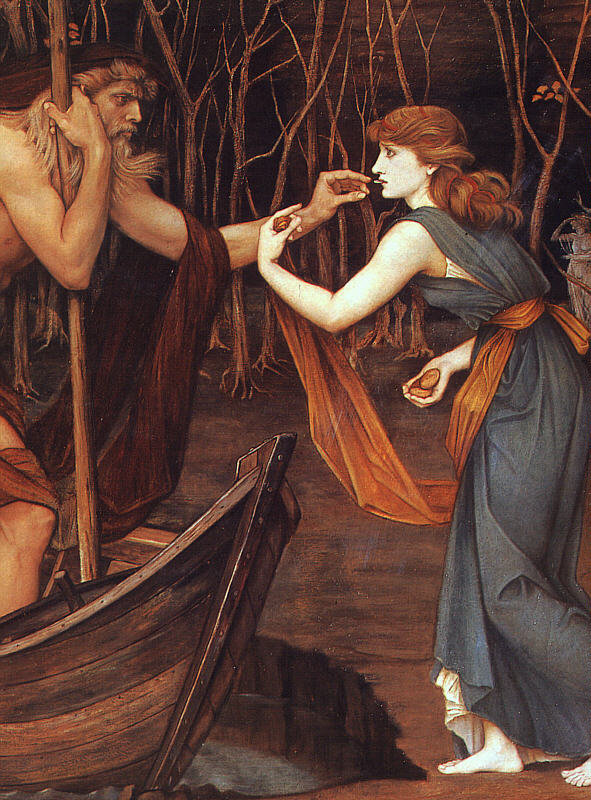
LATINO, DANTE
ALIGHIERI, SWEET NEW STYLE: BRUNETTO
LATINO, DANTE
ALIGHIERI, &
GEOFFREY CHAUCER
|| VICTORIAN:
WHITE
SILENCE:
FLORENCE'S
'ENGLISH'
CEMETERY
|| ELIZABETH
BARRETT BROWNING
|| WALTER
SAVAGE LANDOR
|| FRANCES
TROLLOPE
|| ABOLITION
OF SLAVERY
|| FLORENCE
IN SEPIA
|| CITY AND BOOK CONFERENCE
PROCEEDINGS
I, II, III,
IV,
V,
VI,
VII
, VIII, IX, X || MEDIATHECA
'FIORETTA
MAZZEI'
|| EDITRICE
AUREO ANELLO CATALOGUE
|| UMILTA
WEBSITE
|| LINGUE/LANGUAGES: ITALIANO,
ENGLISH
|| VITA
New: Opere
Brunetto Latino || Dante vivo || White Silence
With gratitude to the Beazley Archive of the Ashmolean Museum. See Egyptian Motives in the 'English' Cemetery.
http://www.78s.ch/wp-content/uploads/2007/11/01-sergei-rachmaninov-the-isle-of-the-dead-symphonic-poem-op29.mp3
Call up music file, then
reduce to icon, and recall this file to have them be
simultaneous. Rachmaninoff
uses the sound of the oars of Charon's boat on the
waters for his symphonic poem, the 'Isle of the Dead', Opus
29
APULEIUS, TRANSLATED BY ELIZABETH BARRETT
BROWNING, ILLUSTRATED BY FREDERIC, LORD LEIGHTON, JOHN
RODDAM SPENCER STANHOPE, AND THE ENGLISH CEMETERY
Museo Archeologico Nazionale, Firenze, 23 settembre 2006,
ore 11.00
Europe is shaped by Mediterranean culture.
Likewise America and Australia. Two African Romans, Terence
and Apuleius, had all their surviving writings copied out by
Giovanni Boccaccio, in two manuscripts in the Laurentian
Library in Florence. The Egyptian Book of the Dead and
the Egyptian worship of Isis and Osiris meet with Greco-Roman
culture in the world classic, Apuleius' Golden Ass,
which describes the pilgrimage made by Lucius, a Dante figure,
transformed into a donkey who must expiate his folly, and
become a priest of Isis, at the centre of which an old woman
tells the mirroring consolation Greco-Roman story within the
story of Cupid and Psyche to a young lover, the teller then
hanging herself, the two young lovers being murdered. This
book became Christianized, being an allegory of the soul in
the tale, and the tale within the tale. We find it celebrated
amongst the tombs in the English Cemetery, with chrysalide
becoming butterflies (Psyche=Soul= Butterfly), and with many
Egyptian symbols, not least the closed lotus buds at the entry
to it. (Interestingly, too, Elizabeth Barrett
Browning’s nickname as a child, and to Robert, was ‘Ba’, the
Egyptian word for soul, a winged bird figure in their art.)
For in 1828 Jean-François Champollion and Ippolito Rosellini journeyed on their scientific expedition to Egypt and Nubia, funded by the Grand Duke Leopold of Tuscany. In that same year a Nubian slave of fourteen was living in Florence. Baptised in an Orthodox family she was given the name of Nadezhda, ‘Hope’, and she is buried in our Cemetery in a most beautiful tomb that tells her story in Russian in Cyrillic letters chiselled into its marble. Likewise, Arthur Hugh Clough's tomb has the Egyptian sun disk and lotus copied out by Susan Horner of the Marchese Torrigiani's copy of Champollion's book, Monuments de l’Egypte et de la Nubie, published posthumously in 1845. She wrote: ‘The Marchese Torrigiani sent me Champollion’s work on Egypt as Blanch wanted me to make a drawing from the winged figure of the Divinity for Mr Clough’s tombstone’.

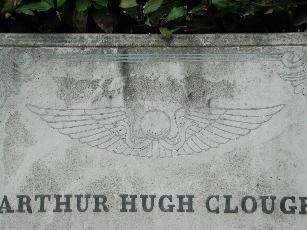
This
winged sun disk features on the invitation to this event and
we are most grateful for the Museo Archeologico’s restoring of
Arthur Hugh Clough’s tomb for this event.
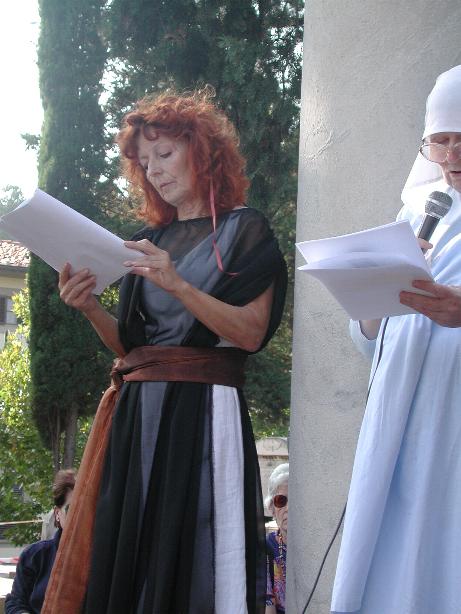
Elizabeth
Barrett Browning translated Apuleius' story in Latin of Cupid
and Psyche exquisitely into English verse, which I will read
in English, Grazia in Italian this afternoon at 4:00 p.m. in
the ‘English’ Cemetery. Elizabeth carried out that translation
in her sickroom in Wimpole Street, St Marylebone Parish, in
1845, during Robert’s courtship of her. She had been
commissioned to create these translations in verse for Miss
Thomson’s Classical Album, an album which was
never published but which was based on the 1839 Catalogue
of the Very Celebrated Collection of Antique Gems of the
Prince Poniatowski, its daguerreotypes by Antoine François Jean
Claudet, exhibited in Cambridge in 1845. The Prince, associated with Florence,
commissioned the gems. When they were discovered later to be
Victorian fakes they were discounted. Now their great value is
being realized and the Ashmolean Museum has a project seeking
all information concerning this dispersed collection, for it
is becoming recognised that the Victorians were the last
generation to know these ancient skills and to study them with
care. Sixteen years later, in Rome in 1861, the year of
Elizabeth’s death and burial here, the Brownings’ young son
Pen was to play Cupid to a young girl's Psyche. The story of
Cupid and Psyche is a very great love story, like Elizabeth’s
own with her fellow poet, Robert Browning, like the Italian
Risorgimento’s I promessi sposi.

Versione in italiano
'English Cemetery, Florence, 23 September 2006,
4:00 p.m.
Cimitero detto 'degli Inglesi', 23 settembre 2006, ore 16.00
Original Latin
Translation in English
Versione in italiano
______
Original Latin
IV.35
V. 23
Translation in English
1. Psyche was a most beautiful young girl with
two older jealous sisters. Everyone admired her but no one
married her. Until her father took her up on a hill to be
married to a god. Or a monster.
While Psyche wept upon the rock
forsaken,
Alone, despairing, dreading, - gradually
By Zephyrus she was enwrapt and taken
Still Trembling, - like the lilies planted high, -
Through all her fair white limbs. Her vesture spread,
Her very bosom eddying with surprise, -
He drew her slowly from the mountain-head,
And bore her down the valleys with wet eyes,
And laid her in the lap of a green dell
As soft with grass and flowers as any nest,
With trees beside her, and a limpid well:
Yet Love was not far off from all that Rest.

_______
2. She comes into a palace where every night someone unseen comes to her.

Lord Leighton, who designed Elizabeth Barrett
Browning’s tomb, painted a scene of Psyche taking her bath in
this magical palace.
Her sisters visit and tell her to murder this
monster during his sleep. She prepares to do so:

________
3. She stands gazing on him, next tries to play with her
husband’s quiver full of arrows, being pricked by one.
4. Next, gazing upon her beloved, holding
the lamp close to him, she accidentally drops some burning
oil upon his shoulder. He wakes and flees.
She, hopelessly lovelorn, goes seeking
Cupid. She tries to drown herself in the River, which casts
her back up again.
The gentle River, in her Cupid’s
honour,
Because he used to warm the very wave,
Did ripple aside, instead of closing on her,
And cast up Psyche, with a refluence brave,
Upon the flowery bank, - all sad and sinning.
Then Pan, the rural god, by chance was leaning
Along the brow of waters as they wound,
Kissing the reed-nymph till she sank to ground,
And teaching, without knowledge of the meaning,
To run her voice in music after his
Down many a shifting note;
. . .
And as the hoary god beheld her there,
The poor, worn, fainting Psyche! – knowing all
The grief she suffered, he did gently call
Her name, and softly comfort her despair.

5. Now Elizabeth Barrett
Browning often wrote of the god Pan,
even comparing her dog Flush to him. One of her Last
Poems was ‘A Musical Instrument’, about Pan and her own
poetic craft. Lord Leighton illustrated it with a fine
engraving.

Then, when
Leighton sculpted her tomb he put on the lyre for
the Greco-Roman world the two faces of the god Pan
likely from the statue in the Giardino Torrigiani. The other two medallions
represent the Hebrew harp of David, with a broken
slave shackle on it for freedom from Egyptian and
Babylonian bondage, and the Christian harp with the
cross, these representing Europe’s rich
multiculturalism. But also the tragedy of
nineteenth-century slavery, the serfs in Russia, the
blacks in America. Elizabeth Barrett Moulton Barrett’s
family for generations owned slaves in Jamaica. In
this cemetery are the tombs of Fanny Trollope,
English, and Richard Hildreth, American, who wrote the
first anti-slavery novels, paving the way for Harriet
Beecher Stowe’s Uncle Tom’s Cabin.
Beside the tomb of Richard Hildreth, American Consul
in Trieste, is that of his fellow Unitarian, the great
American preacher against slavery, Theodore Parker.
Another
American Consul has his large tomb here, the bibliophile
James Lorimer Graham, who hosted Claire Clairmont, half
sister of Mary Shelley, mother of Lord Byron’s child
Allegra, and the subject of Henry James’ Aspern
Papers in his large villa, now the Palazzo dei
Congressi. There
are as well the tombs of Nadezhda, the black slave who came
from Nubia to Florence at 14, being baptised in a Russian
Orthodox family with the name ‘Hope’, and near her, that of
a third American (and part Native American), Consul Hiram
Powers, who sculpted ‘America’ and ‘The Last of Her Tribe’
and ‘The Greek Slave’, this last exhibited at the centre of
the Crystal Palace Exhibition in 1851 and about whom
Elizabeth had written this sonnet against slavery.
‘HIRAM POWERS’ GREEK SLAVE’
6. In Psyche’s anger with her
sisters she tells them to go to the same hill top and cast
themselves down as she had. But they are not protected by
Zephyrus, instead are dashed against the rocks. She comes to
Ceres’ temple, seeking sanctuary there, and sorts out all
the sacred sheaves and harvesting scythes, but Ceres has to
obey Venus.
This is Psyche’s speech to Ceres:
‘Now, by thy right
hand’s gathering from the shocks
Of golden corn, - and by thy gladsome rites
Of harvest, - and thy consecrated sights
Shut safe and mute in chests, - and by the course
Of thy slave-dragons, - and the driving force
Of ploughs along Sicilian glebes profound, -
By thy swift chariot, - and by thy steadfast ground, -
By all those nuptial torches that departed
With thy lost daughter, - and by those that
shone
Back with her, when she came again glad-hearted, -
And by all other mysteries which are done
In silence at Eleusis, - I beseech thee,
O Ceres, take some pity, and abstain
From giving to my soul extreme pain
Who am the wretched Psyche! Let me teach thee
A little mercy, and have thy leave to spend
A few days only in thy garnered corn,
Until that wrathful goddess, at the end,
Shall feel her hate grow mild the longer borne -

7. She then goes to Venus who sets
her impossible tasks, the last to bring back from
Proserpine in Hades a jar with beauty inside it. She is
advised on her despairing journey to go down to Hades with
two coins in her mouth and two cakes in her hand, the
coins with which to pay Charon, the cakes with which to
appease Cerberus. Elizabeth does not translate this scene
from Apuleius’ prose into her English verse, but another
paints it. For next to Elizabeth Barrett Browning's tomb
is that sculpted by John Roddam Spencer Stanhope for his
dead daughter Mary, whom he painted as Psyche going down
to Hades, meeting Charon.


A
mighty dog with three colossal necks,
And heads in grand proportion; vast as fear,
With jaws that bark the thunder out that breaks
In most innocuous dread for ghosts anear,
Who are safe in death from sorrow: he reclines
Across the threshold of queen Proserpine's
Dark-sweeping halls, and, there, for Pluto's spuse,
Doth guard the entrance of the empty house.
When Psyche threw the cake to him, once amain
He howled up wildly from his hunger-pain
and was still, after. -
_______
8. Having fulfilled all Venus’ tasks, Psyche is now
able to claim Cupid as her husband. For this tale is the
ancestor of the Risorgimento’s I promessi sposi,
just as much as The Golden Ass is ancestor to
Carlo Collodi’s Pinocchio changed into a donkey.
Their wedding feast, though Psyche is mortal, is held on
Mount Olympus.
And Jove’s right hand
approached the ambrosial bowl
To Psyche’s lips, that scarce dared yet to smile, -
‘Drink, O my daughter, and acquaint thy soul
With deathless uses, and be glad the while!
No more shall Cupid leave thy lovely side;
Thy marriage-joy begins for never-ending.’
While yet he spake, - the nuptial feast supplied, -
The bridegroom on the festive couch was bending
O’er Psyche in his bosom –

______
1.
Psiche è una fanciulla bellissima che tutti adorano per tale
sua rara bellezza come la nuova Venere ma nessuno osa
prenderla in sposa. Fino a quando dopo aver consultato
l’oracolo è condotta su una rupe per le nozze funebri perché
divenga la sposa di un Dio o di un mostro.
Libro IV 35
Ma
Psiche, pavida e trepida e ancor lacrimante su la cima della
rupe, ecco, sente una lieve aura di carezzevole Zèfiro che le
agita tutte le vesti, che ne gonfia le pieghe, che la solleva
col suo placido soffio, e, portandola giù lungo il pendio
dell'alto monte, lieve lieve la depone nel grembo di un prato
d'erbe fiorite della valle sottostante. [Guido
Vitali]
_______
2. Sollevata da Zefiro Psiche giunge in un palazzo incantato
dove qualcuno a lei invisibile la visita ogni notte.
Frederic
Lord Leighton, che disegnò il sarcofago di Elizabeth Barrett
Browning, in un suo dipinto raffigura Psiche al bagno nel
palazzo incantato.
Le sorelle maggiori sono trasportate al palazzo e
mosse dall’invidia nei confronti di Psiche nella loro
malvagità la istigano ad uccidere il mostro mentre egli dorme.
Psiche si prepara a compiere l'atto:
Libro V 22-23
Allora
Psiche, benché debole nel corpo e nell'animo, pure forzata dal
suo crudele destino si fa coraggio, e tratta fuori la lucerna
e brandito il pugnale, diviene audacemente virile. Ma, non
appena per l'apparire del lume si chiarirono i segreti del
talamo, vide la belva più mite e più dolce fra tutte le fiere,
lo stesso leggiadro Dio Amore leggiadramente addormentato, per
la cui sembianza gioioso si avvivò anche il lume della
lucerna, e balenò il pugnale dalla sacrilega lama. E Psiche,
atterrita a tal vista e fuor di sé, sfatta da molle pallore e
trepidante, cadde seduta sui calcagni e voleva nascondere il
ferro, ma nel proprio seno; e l'avrebbe fatto se il ferro, per
timore di sì grave delitto, sfuggendole dalle mani temerarie
non fosse balzato lontano. E abbattuta . . . qual
era, ecco, riprende animo più e più mirando la bellezza del
volto divino. [Guido Vitali]
________
3.
Psiche vede Cupido al lume della lucerna, e gioca con la
faretra dello sposo piena di frecce.
Libro V 23
E
contempla le armi . . . trae fuori dalla faretra una
freccia, e, con la pressione del pollice tentando la cuspide
acuta, con un moto un poco più brusco dell'ancor trepido
ditino si punge alquanto profondamente, sì che a fior di pelle
sbocciano come rugiada piccolette goccioline di roseo sangue.
Così l'ignara Psiche da sé stessa cadde nell'amore di Amore.
[Guido Vitali]
Ammirando
l’amato,
e accostandosi a lui con la lampada accesa accidentalmente fa
cadere una goccia d’olio bollente sull’omero. Cupido si
risveglia e vola via, si dilegua . . .
________
4. Psiche, struggendosi per l’abbandono, ricerca
disperatamente Cupido. Tenta di darsi la morte gettandosi nel
fiume ma le acque del fiume la riportano sulla sponda.
Libro V 25-26
Tuttavia il gentil fiume, certo in onore del Dio che sa
infiammare anche le acque e anche temendo per sé, subito con
un flutto benigno la depose sopra l'erbosa e fiorita sua riva.
[Guido Vitali] Proprio allora Pan, dio rustico, sedeva per
caso presso il ciglio del fiume tenendo fra le braccia Eco,
dea montanina, e le insegnava a modulare i suoni più svariati
. . . Il dio caprino, che non era all'oscuro . . . della
sua sventura, chiamò a sé la sfinita e piagata Psiche e
. . . la confortava con miti parole. [Massimo
Bontempelli]
_________________
5.
Elizabeth Barrett Browning nella sua poesia si ispirò molto alla figura del Dio Pan, paragonò al Dio anche il suo cane Flush, e in una delle ultime poesie intorno al suo talento poetico intitolata “A Musical Instrument” accusa Pan di averle reciso la canna-vita-poesia per fabbricarne il suo flauto. Una bellissima incisione di Lord Leighton illustra la poesia. La lira a simbolo del mondo greco-romano scolpita sulla tomba di Elizabeth, disegnata da Lord Leighton, mostra il Dio Pan bifronte; egli trasse probabilmente ispirazione dalla statua del Dio nel Giardino Torrigiani. Gli altri due medaglioni rappresentano uno l’arpa del re Davide sulla quale posano le catene spezzate a simbolo della liberazione dalla schiavitù d’Egitto e di Babilonia, e l’altro una lira con la croce, a simbolo della cristianità.
Tutti
e tre gli strumenti a corde stanno a significare il ricco
multiculturalismo dell’Europa. Ma l’arpa significa anche la
tragedia della schiavitù nell’Ottocento, i servi in Russia e i
neri in America. La famiglia di Elizabeth Barrett Moulton
Barrett per generazioni ha posseduto schiavi in Giamaica.
Fanny Trollope, inglese, e Richard Hildreth, Console americano
a Trieste, autori dei primi romanzi contro la schiavitù,
modelli per Uncle Tom’s Cabin (La
capanna dello zio Tom) di Harriet Beecher Stowe, hanno
trovato sepoltura in questo cimitero. Il sepolcro di Richard
Hildreth, unitariano, è posto accanto alla tomba di Theodore
Parker, illustre predicatore americano contro la schiavitù,
anch’egli unitariano. Frederick Douglass,
schiavo affrancato e scrittore di fama, giunse a Firenze nel
1886 con l'intento di rendergli omaggio e ne visitò la tomba.
Un
altro Console americano riposa qui, il bibliofilo James
Lorimer Graham, che ospitò nella sua villa, oggì Palazzo dei
Congressi, Claire Clairmont, la sorellastra di Mary Shelley,
madre di Allegra, figlia di Lord Byron, e carattere centrale
di The Aspern Papers (Il
carteggio Aspern) di Henry James. La tomba di Nadezhda,
schiava nera giunta a Firenze dalla Nubia a quattordici anni
d’età e battezzata con il nome di ‘Speranza’ in una famiglia
russa, è collocata accanto al sepolcro di un terzo Console
americano, Hiram Powers (in parte indiano americano), che nel
suo studio a Firenze scolpì ‘America’, ‘The Last of Her Tribe’
e ‘The Greek Slave’. Quest’ultima scultura, esposta al centro
del Crystal Palace in occasione della Grande Esposizione del
1851, ispirò Elizabeth che scrisse il commovente sonetto
contro la schiavitù.
Si dice che
la Bellezza Ideale non possa entrare nella casa d'angoscia.
Una figura straniera sta sulla soglia,
con le mani incatenate, la Schiava greca:
come se lo scultore eleggesse lei,
(quella perfezione impassibile che egli le diede,
ombreggiata, non oscurata, là dove la soglia si apre)
per misurare i crimini degli uomini in diversi lidi,
con ogni ideale dell'uomo. Penetra nell'intimo,
infuocato dito dell'arte! - e presto spezza
la schiavitù di questo mondo! Appellati, bella pietra,
dalla pura sommità della bellezza di Dio, contro il male
dell'uomo!
Cattura nel tuo volto divino, le pene
e dell'oriente e dell'occidente, - e colpisci e umilia i
forti,
da tuoni di bianco silenzio sconfitti!
________
6. Psiche presa dall'ira contro le sorelle dice loro di
recarsi sulla sua stessa rupe e come lei di precipitarsi
giù. Ma esse non protette e non soccorse da Zefiro si
sfracellano sulle rocce. Psiche giunge al tempio di Cerere
per ottenere misericordia e qui con cura divide i fastelli
di spighe di grano dalle falci per la mietitura, ma Cerere
deve obbedire al volere di Venere.
Allora Psiche cominciò così a supplicare Cerere
Libro VI, 2
Per
questa tua mano dispensatrice di messi, per le cerimonie
gioiose della mietitura, per i misteriosi segreti delle
ceste, per i carri alati dei draghi tuoi servitori e per i
solchi della terra di Sicilia, per il carro che rapì e per
la terra che custodì, per la discesa di Proserpina e le sue
nozze nel buio, e per l’ascesa di tua figlia e il suo
ritorno nella luce, e per tutto ciò che il santuario
dell’attica Eleusi copre col silenzio, io ti prego, vieni in
aiuto di Psiche, di questa povera anima che ti supplica.
Lascia che mi nasconda, anche per pochi giorni, in mezzo a
questi mucchi di spighe, finché col passare del tempo si
calmi la collera furiosa di quella dea così potente . . . [Lara
Nicolini]
7. Psiche dopo varie altre peregrinazioni si
presenta a Venere, la dea le assegna compiti impossibili,
l’ultimo dei quali è quello di riportare dall’Ade il vasetto
di Proserpina che custodisce la bellezza. Nel viaggio
disperato, la sua discesa all’Ade, deve portare due monete in
bocca e due focacce in mano, le monete per Caronte e le
focacce per ammansire Cerbero. Elizabeth non ha tradotto
questo passo di Apuleio, ma esiste un dipinto di questa scena.
Accanto al sepolcro di Elizabeth è posta la tomba scolpita da
Roddam Spencer Stanhope per la figlioletta Mary. In un suo
dipinto egli la raffigura come Psiche che discende all’Ade e
incontra Caronte.
_________
8. Avendo portato a termine tutti i compiti assegnatigli da
Venere, Psiche può ora essere accolta come sposa di Cupido.
Questa favola può essere considerata l’antenato dei Promessi
sposi, proprio come l’Asino
d’oro è l’antenato del Pinocchio di Collodi per la metamorfosi del
burattino in asino. Il banchetto nuziale si svolge sull’Olimpo
benché Psiche sia mortale.
Libro VI 23-24
E
subito Giove per mezzo di Mercurio comandò che Psiche fosse
presa e portata in cielo; indi, porgendole una coppa
d'ambrosia: 'Prendi - le disse - e sii immortale e Cupido non
scioglierai mai dal tuo legame e queste saranno per voi nozze
eterne'. [Piero Scazzoso]
9. Subito fu servito un lauto convito nuziale. Giaceva sul
letto più alto il marito, tenendo Psiche tra le braccia. Così
anche Giove con la sua Giunone, e così in ordine tutti gli
Dei. La coppa del nettare, che è il vino degli Dei, la porgeva
a Giove quel pastore fanciullo suo coppiere, agli altri
Libero; Vulcano cuoceva le vivande; le Ore imporporavano tutto
di rose e d'altri fiori; le Grazie spargevano aromi, e le Muse
alzavano i loro canti. E cantò Apollo accompagnandosi con la
cetra, e Venere danzò graziosamente con passi armonizzati alla
soave musica, con la scena di lei disposta in modo che le Muse
cantassero un coro e sonassero i flauti, e Satiro e Panisco
modulassero il canto con la zampogna. [Guido Vitali]
Così
Psiche
divenne
.
.
.
sposa
di
Cupido, e quando giunse l'ora del parto, nacque loro una
figlia che noi chiamiamo 'Voluttà'.
[Marina
Cavalli]
The Poniatowski
Gems plaster casts from the Ashmolean Museum:
Zephyrus e Psyche
Psyche about to murder Cupid
Psyche propitiating Ceres
Pan and Psyche

The Eagle of Jove and Psyche

Psyche and Proserpina

Psyche and Venus

Mercury and Venus

Cupid and Psyche

Psyche
Bibliography
Ter
Terentius Publius Afer. Comedia.
Biblioteca Laurenziana MS Laur. 38.17, scribe, Giovanni
Boccaccio.
Apuleius. Opera. Biblioteca Laurenziana MS
Laur. 54.32, scribe, Giovanni Boccaccio.
Apuleius. The Golden Ass Being the Metamorphoses of Lucius Apuleius, trans. W.
Adlington. London: William Heinemann, 1977.
Apuleius. Le metamorfosi o L’asino d’oro,
a cura di Guido Vitali. Bologna: Zanichelli, 1963.
Apuleio. L’asino d’oro, trad. di Massimo
Bontempelli. Torino: Einaudi, 1973.
Apuleio. Le metamorfosi, a cura di Lara
Nicolini. Milano: Rizzoli, 2005.
Apuleio. Metamorfosi, a cura di Piero Scazzoso. Milano:
Istituto editoriale italiano, 1971.
Apuleio. Metamorfosi: L’asino d’oro, a
cura di Marina Cavalli. Milano: Mondadori, 1988.
Apuleius. Metamorfosi o Asino d’oro, a
cura di Giuseppe Augello. Torino:UTET, 1980.
Apuleio. Gli XI libri delle Metamorfosi,
trad. di Ferdinando Carlesi. Firenze: Sansoni, 1983.
Sonia Cavicchioli. Le metamorfosi di Psiche,
l’iconografia della favola di Apuleio. Venezia:
Marsilio, 2002.
Salvatore Ussia. Amore innamorato: riscritture
poetiche della novella di Amore e Psiche: secoli 15.-17.
Vercelli: Mercurio, 2001.
Tales within Tales: Apuleius through Time. Ed.
Constance S. Wright, Julia Bolton Holloway. New York: AMS Press, 2000.
Elizabeth Barrett Browning. The Complete
Works. Ed. Charlotte Porter, Helen A. Clarke. Vol. VI.
New York: Thomas Y. Crowell, 1900.
Elizabeth Barrett Browning and Robert Browning. The Brownings’ Correspondence, January 1845-July
1845. Ed. Phillip Kelley, Scott Lewis. Winfield, KS:
Wedgestone Press, 1992. Vol. 10.
Elizabeth Barrett Browning. The Letters, ed. Frederic G. Kenyon. New York:
Macmillan, 1899.
Robert Browning and Elizabeth Barrett Barrett. The
Letters, ed. Robert Browning. New York:
Harper, 1898.
Elizabeth Barrett Browning. The Letters to her Sister Arabella, ed. Scott
Lewis. Winfield, KS: Wedgestone Press, 2002.
Catalogue of the Very Celebrated Collection of Antique
Gems of the Prince Poniatowski. 1839.
James Prendeville, Photographic Facsimiles of the
Antique Gems formerly possessed by the late Prince
Poniatowski, accompanied by a description and poetical
illustrations of each subject carefully selected from
classical authors. 1857, 1859.
Ashmolean Museum: http://www.beazley.ox.ac.uk/Gems/Poniatowski/Script/Intro.htm
http://www.beazley.ox.ac.uk/XDB/ASP/addToFolder.asp?guestAlbum={0BE91DAD-F414-4144-BE88-BE2FC40C38E0}
Jean-François Champollion. Lettre a M.
Dacier relative a l’alphabet des hiéroglyphes phonétiques
employés par les égyptiens pour inscrire sur leur
monuments les titres, les noms e les surnoms des
souverains grecs et romains. Paris, 1822.
_______, Monuments de l’Egypte et de la
Nubie. Paris, 1835-45.
The Ancient Egyptian Book of the Dead.
London: British Museum, 1985.
Guida per il giardino del Marchese
Torrigiani in Firenze. 1824.
Richard Hildreth. The Slave.
Boston: John Eastburn, 1836.
Susan Horner. Unpublished Diary. British Institute of
Florence. Alyson Price, Archivist.
Ipopolito Rosellini. I Monumenti
dell'Egitto e della Nubia. Pisa, 1832
Harriet Beecher Stowe. Uncle Tom’s Cabin. 1853.
Frances Trollope. The Life and Adventures of
Jonathan Jefferson Whitlaw, or Scenes on the Mississippi.
London: Richard Bentley, 1836.
Thomas Adolphus Trollope. What I Remember. London:
Richard Bentley, 1887.
Go to Egyptian Motives
in the English Cemetery.
  |
To donate to the restoration by Roma of Florence's
formerly abandoned English Cemetery and to its Library
click on our Aureo Anello Associazione's
PayPal button: THANKYOU! |
FLORIN WEBSITE
A WEBSITE
ON FLORENCE © JULIA BOLTON HOLLOWAY, AUREO ANELLO ASSOCIAZIONE,
1997-2022: ACADEMIA
BESSARION
||
MEDIEVAL: BRUNETTO
LATINO, DANTE ALIGHIERI, SWEET
NEW STYLE: BRUNETTO LATINO, DANTE
ALIGHIERI, &
GEOFFREY CHAUCER
|| VICTORIAN:
WHITE
SILENCE:
FLORENCE'S
'ENGLISH'
CEMETERY
|| ELIZABETH
BARRETT
BROWNING
|| WALTER
SAVAGE LANDOR
|| FRANCES
TROLLOPE
|| ABOLITION
OF SLAVERY
|| FLORENCE
IN SEPIA
|| CITY AND BOOK CONFERENCE
PROCEEDINGS
I, II, III,
IV,
V,
VI,
VII
, VIII, IX, X || MEDIATHECA
'FIORETTA
MAZZEI'
|| EDITRICE
AUREO ANELLO CATALOGUE || UMILTA
WEBSITE
|| LINGUE/LANGUAGES: ITALIANO,
ENGLISH
|| VITA
New: Opere
Brunetto Latino || Dante vivo || White
Silence